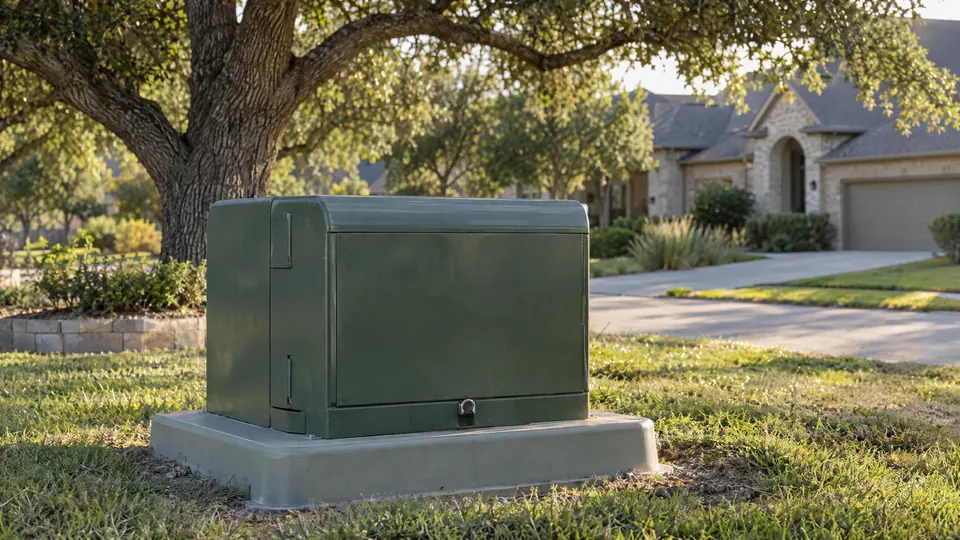
A single phase padmount transformer buyer for Texas sellers
We buy single-phase padmount transformers in typical ratings from 25 kVA through 167 kVA, including single units and whole lots. Any brand can be submitted, whether the transformer is new in a crate, previously energized, retired from service or failed.
These units often become available after subdivision projects change, utility inventories are reduced or distribution equipment is replaced. A residential padmount transformer sitting in storage may still be worth submitting even if its original project is finished or its operating history is incomplete.
Our yard and office are at 6402 McGrew St, Houston, TX 77087. We buy statewide and coordinate trucking and pickup with sellers, so you do not need to bring the equipment to Houston before requesting an offer.
Single-phase padmounts sizes we buy
Identify a single-phase padmount before requesting an offer
A single-phase padmount is a low-profile, enclosed transformer installed at ground level for underground residential or light commercial distribution. The cabinet contains the transformer tank and a connection compartment. These transformers are built to IEEE C57.12.38, the standard covering this equipment type.
Most are dead-front, meaning the energized connections are insulated rather than exposed, and use load-break elbows, insulated cable connectors designed for specified switching duties. Radial units serve a single incoming supply path; loop-feed units provide connections for incoming and outgoing primary cables. Photograph the connection arrangement rather than relying only on cabinet appearance.
A three-phase padmount may have a similar enclosure but a different phase designation and connection layout. A pole-mounted transformer is designed for overhead installation rather than a ground-level cabinet. We also buy other padmount transformer configurations and pole-mounted transformers, so include related equipment if your lot contains more than one type.
Use the nameplate to confirm the phase, rating and voltages. Do not open an energized cabinet to obtain photos; use existing records or have your qualified electrical contractor document inaccessible information safely.
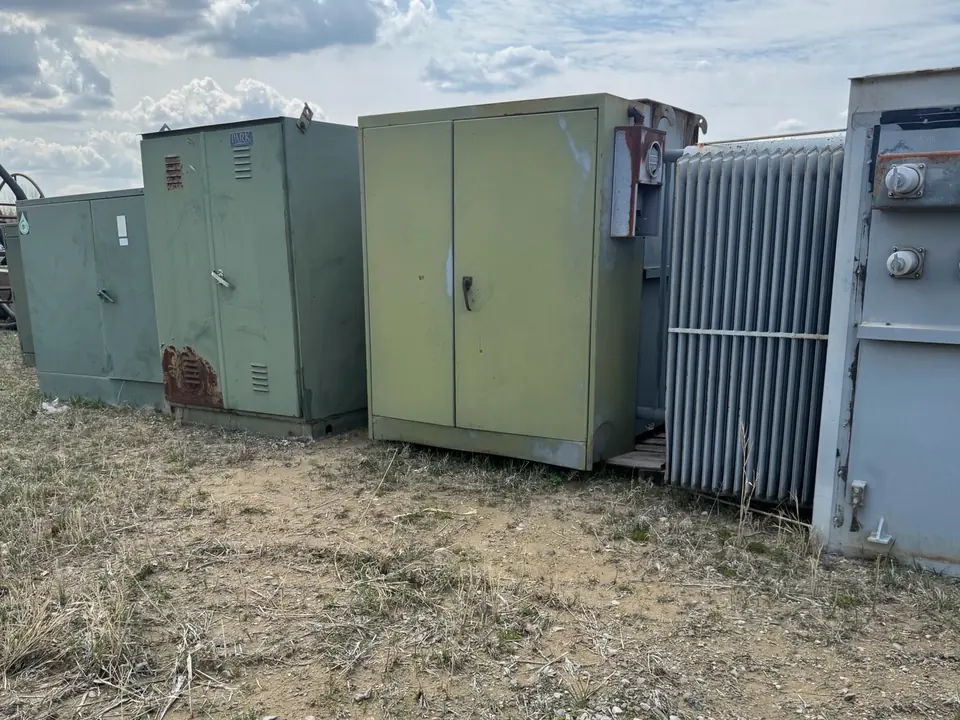
Sizes, primary voltages and secondary voltages we buy
Common ratings include 25, 37.5, 50, 75, 100 and 167 kVA. The kVA rating, or kilovolt-amperes, describes the transformer's apparent-power capacity. If you have 25 kVA, 50 kVA, 100 kVA or 167 kVA padmount transformers, send the details for each rating rather than describing the entire lot as residential units.
Typical primary voltages are 7,200 V, 7,620 V and 14,400 V, corresponding to phase-to-neutral service on 12,470Y, 13,200Y and 24,940Y systems. The Y identifies a wye-connected system. A common secondary voltage is 120/240 V, but the actual nameplate information should guide your submission.
Primary voltage is the incoming supply voltage, while secondary voltage is the transformed output. Different ratings and connection arrangements affect where a unit can be reused, so include all voltage markings and any tap information. Our single-phase size pages from 10–167 kVA cover the broader single-phase range.
New surplus, used, retired and failed units
We buy new surplus units left over from projects, including equipment still in its crate. Photograph the packaging, stored accessories and nameplate, and note whether the transformer has ever been installed or energized. For mixed inventories, separate unused units from equipment returned after service.
A used single phase pad mount transformer can be submitted whether it was working when removed or its condition is uncertain. Tell us why it came out of service and whether it has been stored indoors or outdoors. Existing service records are useful, but you do not need to create a complete history before contacting us.
Retired and failed units are also within our buying scope. Report blown fuses, leaks, damaged bushings, missing elbows, cabinet damage or known internal faults plainly. Our pages for new surplus equipment and failed or scrap transformers explain those selling situations in more detail.
Who sells these transformers across Texas
Subdivision growth around Houston, DFW, Austin and San Antonio can leave surplus and returned units when plans change or material needs are revised. Developers and electrical contractors may have unused transformers after a project closes, while utility and co-op staff may have retired units or excess inventory.
Facility owners and property managers may sell equipment after a service upgrade, redevelopment or distribution-system replacement. Plant and project managers can also have single-phase units supporting smaller buildings or auxiliary loads. Tell us whether the equipment is ready for removal or still tied to an active project.
This equipment comes up in Pearland, Sugar Land, Katy, The Woodlands, League City, Galveston, Frisco and McKinney, as well as other Texas communities. Sellers can visit our Pearland transformer buying page for local selling information. All purchases are coordinated from our Houston location.
What determines the offer
As a single phase padmount transformer buyer, we assess the equipment's configuration and condition alongside the practical cost of moving it. Rating, primary and secondary voltages, age and brand help identify the unit. Quantity matters too, especially when a lot includes matching transformers or several different configurations.
Existing test reports can help document condition. Include electrical test results or oil-test records you already have, plus any service notes explaining a failure or repair. PCB status also matters: PCBs, or polychlorinated biphenyls, are chemicals associated with some older insulating fluids, so send available labels or laboratory documentation rather than guessing.
Accessories and completeness affect the assessment. Show elbows, bushings, fuses, cabinet doors and any loose components included with the sale. A missing part should be identified specifically, not hidden behind a general description such as used condition.
Location and load-out access are part of the offer assessment. A unit on an accessible storage pad presents a different move from one behind a locked fence or in a restricted equipment area. Our guide to what affects a used transformer's value provides more context without substituting for an equipment-specific offer.
Exactly what to send for a quote
To sell a single phase padmount transformer, call or text (951) 403-5738, email Industrial832@gmail.com, or request an offer through our form. Start with the following information so we can identify the equipment and assess the lot.
For multiple units, match each nameplate photo to its overall photos using a simple unit number or file label. If a plate is faded, send the clearest image available and any inventory record that identifies the transformer. We examine the details and respond with an offer.
- A readable nameplate photo showing phase, kVA, primary and secondary voltages, manufacturer and available date information.
- Overall photos showing the cabinet, tank, base and visible damage, plus connection-compartment photos if safely available.
- Total quantity and a breakdown by rating, voltage and condition for mixed lots.
- The Texas pickup location, site contact and whether the equipment is installed, disconnected, crated or in storage.
- Known operating condition, reason for removal, missing accessories and available test reports or PCB documentation.
- Load-out details, including gate access, surface conditions, lifting equipment available and restrictions affecting truck access.
How pickup, freight and load-out work
You get the price, payment terms and pickup details in writing before a truck is loaded. The seller, or the seller's qualified electrical contractor, must de-energize and disconnect installed equipment. We work out trucking and load-out with you.
Before arranging the move, confirm whether each transformer is freestanding, secured to a pad or stored in a crate. Share its documented weight and dimensions when available, along with photos of the loading area. Truck access, lifting arrangements and the condition of the base all help determine a workable pickup plan.
For a whole lot, identify which units are included and keep loose accessories matched to the correct transformer. Tell us about site scheduling restrictions during the quote process so they can be addressed in the written pickup details.
Frequently asked questions
Do you buy units with blown fuses or missing elbows?
Yes. We buy failed and incomplete transformers as well as working units. Describe the known fault and photograph missing or damaged components. A blown fuse alone does not establish the condition of the transformer, so include any troubleshooting notes already available.
Can I sell a transformer without test reports?
Yes. Send the nameplate, overall photos and your best description of its operating history. Existing reports help us assess condition, but units without reports can still be submitted. Make clear whether it was working when removed, failed in service or has an unknown history.
How heavy is a single-phase padmount transformer?
Weight varies by rating, manufacturer and design, so cabinet size alone is not a reliable lifting guide. Check the nameplate, shipping records or manufacturer documentation for the actual weight. Send that information with dimensions so freight and load-out can be planned around the specific unit.
Will you buy one transformer outside the Houston area?
Yes. We buy single units and whole lots anywhere in Texas and coordinate trucking and pickup. Send the location and access details with your photos. Our yard and office are in Houston; the equipment does not need to be delivered there before we assess it.
Can I get an offer while the transformer is still installed?
Yes. Send safely available photos, nameplate information and the expected removal circumstances. Explain whether it is still energized and who will handle disconnection. Your team or qualified electrical contractor must complete de-energization and disconnection before the agreed load-out.