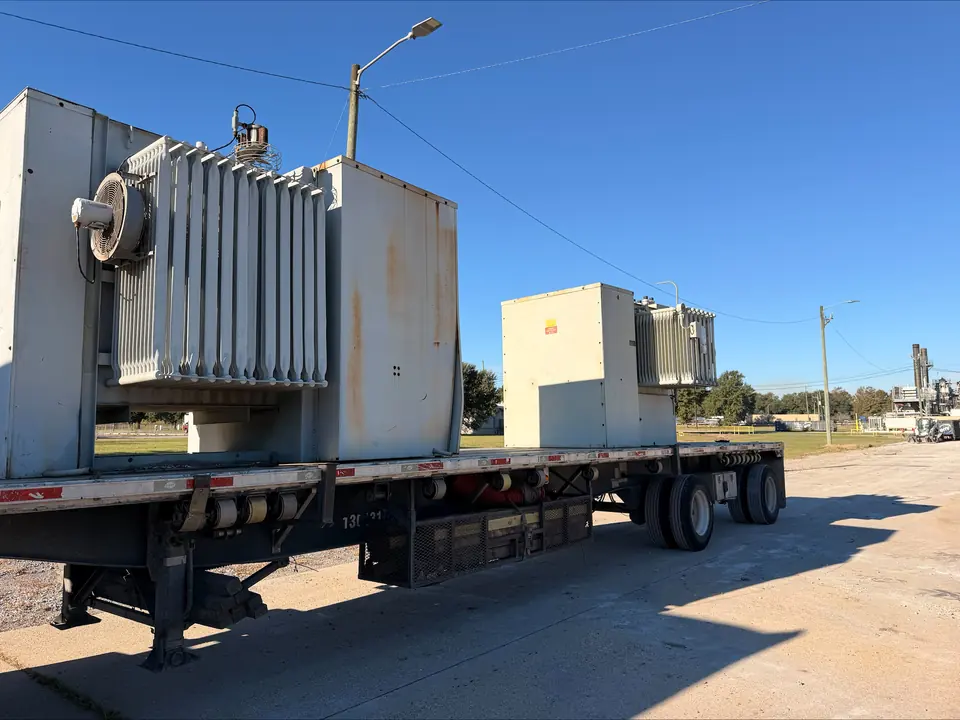
A unit substation buyer for complete assemblies or sections
We buy single units and whole lots, any brand, including unit substations typically rated from 500 kVA to 5,000 kVA. We also buy transformers outside that range, from small pole-mounted units to large power transformers. Equipment can be new in a crate, previously operated, retired from service or failed.
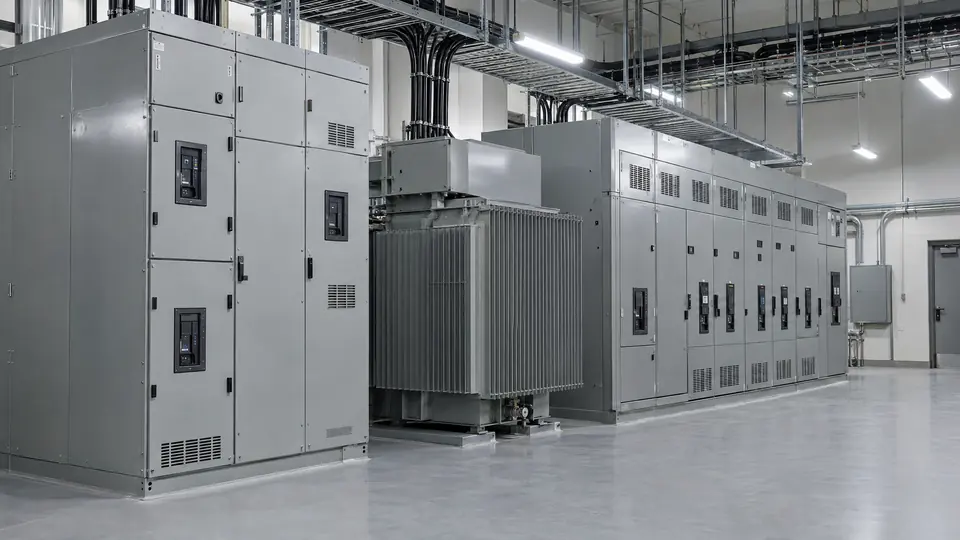
A unit substation combines a transformer with adjoining switching and distribution equipment. The transformer is close-coupled through a flanged throat to a primary switch or fused switch and to low-voltage switchgear or a switchboard. That connection is more than a physical arrangement: it makes the matching sections important to identifying and evaluating the assembly.
If you want to sell a unit substation, show us the complete lineup before separating it. Include any primary switch, transformer, secondary gear and connecting pieces available with the sale. If only the transformer section remains, send its details and explain which adjoining sections are missing.
Unit substations sizes we buy
Identify the transformer and its adjoining equipment
Start with the transformer nameplate, then photograph the labels on both adjoining sections. A flanged throat is the enclosed connection between equipment sections; photos of these connections help establish how the lineup fits together. Wide shots should show the full assembly, not just the transformer tank or enclosure.
A unit substation is not simply any transformer serving a facility. A standalone substation transformer may connect to separate equipment through cables or buswork rather than form a close-coupled assembly. Our substation transformer buying page covers those separate transformer applications.
A pad-mounted transformer is generally a ground-level enclosed distribution transformer, rather than the complete transformer-and-switchgear lineup described here. If your equipment has integral cable compartments but no adjoining switchgear section, compare it with the equipment on our padmount transformer page.
When describing close-coupled transformer switchgear, identify which section each photo shows. Note whether the primary equipment is a switch or fused switch and whether the secondary equipment is switchgear or a switchboard. A one-line drawing, which summarizes the electrical connections, helps resolve uncertain descriptions.
Ratings, voltages and transformer construction we buy
Common ratings include 500, 750, 1,000, 1,500, 2,000, 2,500, 3,000 and 3,750 kVA, along with units up to 5,000 kVA. kVA means kilovolt-amperes, a transformer capacity rating; 1,000 kVA equals 1 MVA, or megavolt-ampere. We evaluate both individual ratings and mixed-size lots.
Primary unit substations step 69 kV or 34.5 kV down to medium voltage. Secondary unit substations step medium voltage down to 480Y/277 V, a configuration providing 480 volts phase-to-phase and 277 volts phase-to-neutral. As a secondary unit substation buyer, we need the actual primary and secondary voltages from the nameplate rather than an assumed facility voltage.
The transformer section may be liquid-filled, cast coil or VPI dry-type. Cast coil windings are encapsulated in resin; VPI means vacuum pressure impregnation, a process used to insulate dry-type windings. We buy each construction type, including equipment described on our cast coil transformer page.
Include every listed cooling rating if the nameplate shows more than one capacity. For size-specific information, see our pages for 500 kVA transformers and 1,000 kVA or 1 MVA transformers. The assembly details still matter even when two transformers have the same kVA rating.
New surplus, used, retired and failed unit substations
New surplus equipment may become available after a canceled project, design change or replacement specification. Keep shipping labels, packing lists and loose accessories with the assembly. Tell us whether the equipment remains crated, was installed but never energized, or was removed after service.
A used unit substation can become available during a capacity upgrade, plant shutdown or electrical distribution redesign. Retired equipment does not have to be currently operating for us to evaluate it. Failed transformers and lineups with damaged or missing components are also equipment we buy; identify the known fault and affected section.
For surplus unit substations in Texas, distinguish storage wear from operating damage. Photograph corrosion, leaks, broken bushings, damaged doors or missing connections, and explain any known repair work. A clear condition description lets us evaluate what is actually available rather than infer condition from a distant photo.
Texas facilities and projects that sell unit substations
Unit substations are common in refineries, chemical plants, hospitals, universities and data centers. Facility owners, plant managers, electrical contractors and project managers may have equipment available after upgrades, building demolition, expansion changes or replacement of an entire distribution lineup. Utility and co-op staff, developers and oilfield operators can also submit available equipment for an offer.
Projects in Houston, Pasadena, Baytown, Deer Park, The Woodlands, Texas City, Freeport and Dallas can involve this equipment. We buy statewide, including single assemblies and lots spread across a seller's project locations. Provide a separate location and equipment list for each site so freight planning matches the actual inventory.
Texas Transformer Buyers is based at 6402 McGrew St, Houston, TX 77087. Our office and yard are in Houston, and we coordinate trucking and pickup across Texas. Sellers do not need to transport the equipment to Houston before requesting an offer.
What affects the offer for your equipment
Rating, primary and secondary voltage, age, brand and condition all help establish the offer. With a unit substation, the switchgear brand and condition also matter. Keeping matching sections together and supplying one-line drawings gives a clearer picture of the complete assembly and its connections.
Available test reports help document condition. Include the report date and identify the equipment tested, especially if several transformers share a site. For liquid-filled equipment, provide any known PCB status and supporting records; PCB refers to polychlorinated biphenyls, substances relevant to evaluating some older insulating liquids.
List accessories such as fans, gauges, control cabinets, spare fuses and connecting hardware. Note missing parts rather than leaving them out of the description. Quantity, storage location and load-out access also affect the offer because a complete accessible lineup differs from separated sections inside a restricted electrical room.
Our guide to factors that affect used transformer value explains the importance of equipment details. There is no single price based only on kVA or weight. As your unit substation buyer, we evaluate the transformer, adjoining gear and practical removal details together.
Send these details for a unit substation quote
Call or text (951) 403-5738, email Industrial832@gmail.com, or submit your equipment for an offer. Start with the information below; available drawings and records can accompany the photos. We evaluate the details and respond with an offer.
- Clear transformer nameplate photos showing rating, voltages, manufacturer, serial number, manufacture date if listed, and impedance, which describes opposition to current flow.
- Overall photos of the complete lineup, plus labels and condition photos for the primary switch, transformer and secondary switchgear or switchboard.
- Quantity, site location and a description of each unit's condition: new surplus, used, retired or failed, including known faults and missing parts.
- Available one-line drawings, test reports, liquid records and PCB documentation, along with a list of accessories and loose connecting pieces.
- Load-out information, including indoor or outdoor placement, access restrictions, available dimensions and weights, and whether sections are still joined or already separated.
Agree on the sale and coordinate pickup
You get the price, payment terms and pickup details in writing before a truck is loaded. The unit has to be de-energized and disconnected by the seller or the seller's qualified electrician. We coordinate freight and load-out with the seller.
Plan access around the complete assembly, not just the transformer section. Share doorway dimensions, overhead restrictions, truck access and any site requirements affecting loading. If the lineup must travel in separate sections, identify the sections and preserve the matching hardware and documentation.
Use nameplate weights or manufacturer documents where available, and tell us whether a listed weight covers one section or the entire lineup. Photos of the planned loading area help explain access. These details support pickup planning without guessing at the equipment's size or handling requirements.
Frequently asked questions
Will you buy a unit substation with blown fuses or missing elbows?
Yes, we buy failed equipment and units with missing parts. Photograph the affected components and identify the section involved. If elbows, the separable cable connectors used on some equipment, are missing, include that detail along with any known transformer or switchgear damage.
Can I sell the transformer without its original switchgear?
Yes, we buy individual transformers as well as complete assemblies. Send the transformer nameplate and overall photos, and describe what was removed. Include pictures of the remaining flanged throats and connecting hardware so we can evaluate the section you have.
Do I need test reports before requesting an offer?
No. Send the available photos, ratings and condition information even if test reports are unavailable. Existing reports can help document condition, but tell us plainly when records are missing rather than treating the equipment as tested.
How much does a unit substation weigh?
Weight varies with rating, construction and the included switchgear. Check each section's nameplate, drawings or manufacturer documents. Send the listed weights and explain what they cover; a transformer-only weight should not be treated as the weight of the complete lineup.
Can you pick up several units at different Texas sites?
We buy whole lots and coordinate trucking and pickup statewide. Send an inventory grouped by location, with photos, condition and access details for each site. Pickup arrangements for the equipment are agreed in writing before loading.