
Transformer Buyers for West Texas and the Permian Basin
We buy transformers in West Texas and the Permian Basin from facility owners, electrical contractors, utilities, co-ops, developers and oilfield operators. Single units and whole lots are welcome, whether the equipment is new in a crate, still working, retired from service or failed.
We operate from our Houston yard at 6402 McGrew St, Houston, TX 77087. We coordinate trucking and pickup statewide, including sites around Midland, Odessa, Big Spring, Pecos, San Angelo, Abilene and El Paso. You do not need to move equipment to Houston before requesting an offer.
Start with the equipment you have, not a guess about its scrap value. A readable nameplate and clear overall photos help us identify the rating, configuration and condition before discussing price and transportation.
| City | County | Main routes |
|---|---|---|
| Midland, TX | Midland County | I-20, SH 349, SH 191 |
| Odessa, TX | Ector County | I-20, SH 191, Loop 338 |
| Big Spring, TX | Howard County | I-20, US-87, SH 350 |
| Pecos, TX | Reeves County | I-20, US-285, SH 17 |
| San Angelo, TX | Tom Green County | US-87, US-67, US-277 |
| Abilene, TX | Taylor County | I-20, US-83/84, US-277 |
| El Paso, TX | El Paso County | I-10, US-54, Loop 375 |
Oilfield Changes and Renewable Projects Create Surplus
The Permian Basin is the most productive oil field in the United States, with electrical demand from drilling, pumping and compression. Equipment replacements, changes in service requirements and project closeouts can leave transformers available for sale. Include whether each unit was operating when removed or came out after a failure.
For sellers around Midland and Odessa, useful details include the transformer’s former application and whether it remains at a lease, yard or operating facility. Around Pecos and Big Spring, remote locations make an accurate pickup address and site contact especially helpful.
Large wind and solar farms also use collector substations and step-up transformers, which raise voltage for transmission or interconnection. If a renewable project has spare equipment, canceled purchases or replaced units, send the individual nameplates rather than describing the lot only by project size.
Industrial, Utility and Construction Equipment
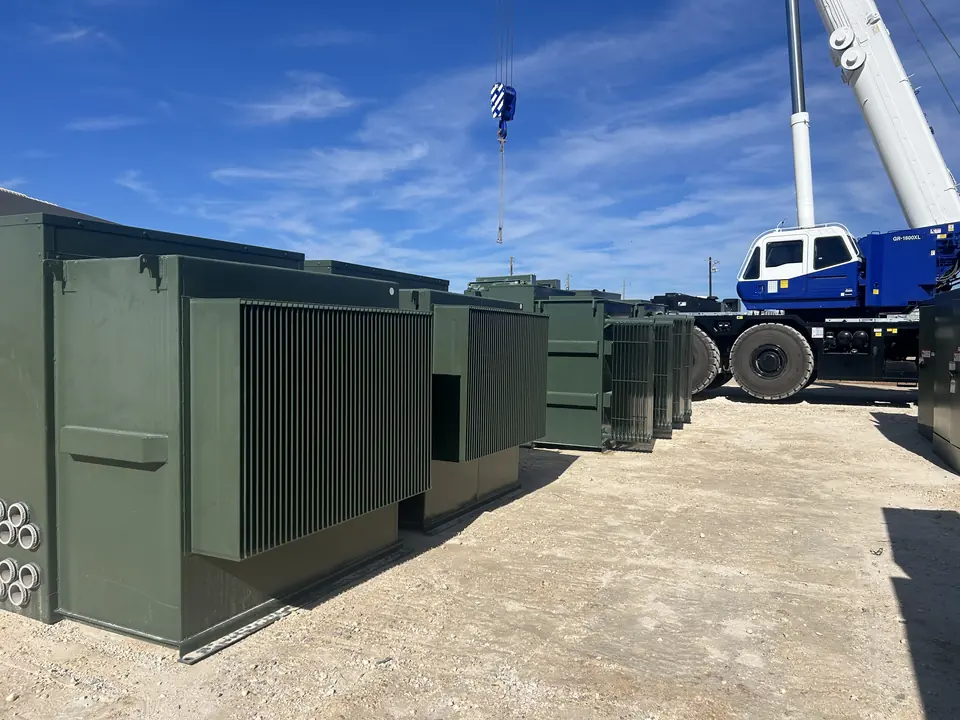
West Texas surplus is not limited to oilfield sites. Military facilities and border manufacturing in El Paso, new AI data center construction in Abilene, and utility or commercial projects throughout the region can produce unused purchases, replacement equipment and retired transformers.
When you sell transformers in West Texas and the Permian Basin, explain whether the units are project surplus, warehouse inventory or equipment removed from an existing installation. New equipment should be photographed with its crate, packaging and any accessible identification. For used equipment, show the enclosure, bushings, connection compartments and visible damage.
Our regional coverage includes Abilene projects, San Angelo facilities and El Paso industrial sites. A mixed lot can include different brands, ratings and conditions; list the quantity of each type so the offer matches what is actually available.
Transformer Types and Ratings We Buy
We buy any brand, from 10 kVA pole-mount units to large MVA substation and power transformers. kVA means kilovolt-amperes and MVA means megavolt-amperes, the ratings used to describe transformer capacity. Send the actual nameplate rating rather than estimating capacity from the cabinet size.
The primary and secondary voltages identify the incoming and outgoing voltage levels. Nameplate impedance, the transformer’s opposition to current flow, is another useful specification. If the plate is faded, take several close photos from different angles and include any equipment records you have.
- Three-phase padmount transformers from oilfield, commercial, utility and industrial installations. Show the cabinet and connection compartments, including any visible damage or missing components.
- Pole-mount transformers, including individual units and accumulated utility or contractor lots. Photograph each distinct rating and identify the quantity associated with it.
- Substation transformers, large power transformers and oil-filled, or liquid-filled, units. Include overall dimensions and weight information when available.
- Step-up transformers, generator step-up units and renewable-project equipment, along with scrap, failed and damaged transformers. Describe the failure or damage plainly and show the affected areas.
Photos and Details Needed for an Offer
As a used transformer buyer serving West Texas and the Permian Basin, we need enough information to understand both the equipment and the pickup. Send a nameplate photo, overall photos, quantity, location and condition. For a lot, number the units in your photos or provide a simple inventory that ties each plate to its transformer.
Condition notes should distinguish working equipment from failed units and identify missing parts, leaks or visible damage. If you have maintenance records or test reports, include them with the photos. Those records add context, but the first step is a clear description of what you want to sell.
Call or text (951) 403-5738, email Industrial832@gmail.com, or request an offer online. We evaluate the details and respond with an offer. Nothing is loaded until the price, payment terms and pickup plan are confirmed in writing.
Freight Planning for Long West Texas Hauls
Long distances between sites make freight planning part of the transaction, not an afterthought. I-20 and I-10 connect major parts of the region, while US-87, US-285, US-385, SH 349 and US-83/84 serve other corridors. The final approach to a lease, plant or storage yard can matter as much as the highway route.
Tell us about gates, access restrictions, unpaved approaches, tight turns and available loading space. Include dimensions and weight if known, plus whether the equipment is crated, on a pallet or sitting on a foundation. Identify any loading equipment available at the site without assuming it can handle the transformer.
Photos of the approach and loading area can help explain conditions that an address alone will not show. Note overhead obstructions, soft ground and whether a truck has room to turn around. For secured facilities, identify the person who will arrange entry and explain any check-in requirements.
We coordinate freight and load-out with the seller. Our Texas transformer shipping guide provides additional planning context. For multiple pickup locations, separate the inventory by site so transportation discussions reflect the actual stops and access conditions.
Prepare the Equipment for Agreed Pickup
Before pickup, the seller or a qualified electrical contractor hired by the seller must de-energize and disconnect the unit. Keep electrical isolation separate from the freight plan: a transformer that is still connected is not ready to be loaded. Tell us its current status when submitting the details.
Before pickup, confirm which units are included and who will provide site access and loading coordination. Identify any loose accessories included with the sale and keep them matched to the correct unit. For transformer buyers serving West Texas and the Permian Basin, a clear inventory and workable load-out plan help keep the agreed transaction organized across long distances.
Frequently asked questions
Can I sell one transformer, or do I need a full truckload?
We buy single transformers and whole lots. Send the unit’s nameplate, overall photos, condition and location so we can evaluate it and discuss pickup.
Do you buy failed or damaged oilfield transformers?
Yes. We buy failed, damaged and retired transformers as well as working equipment. Describe what happened and photograph visible damage, leaks or missing components.
Do you have an office in Midland or Odessa?
No. Our base of operations is 6402 McGrew St, Houston, TX 77087. We buy statewide and coordinate pickup across West Texas.
Can I request an offer while the transformer is connected?
Yes. Send the photos and details, and explain its current status. The seller or a qualified electrical contractor must de-energize and disconnect it before load-out.