Sell a single-phase transformer from 10–167 kVA
We buy single units and whole lots in common single-phase ratings of 10, 15, 25, 37.5, 50, 75, 100 and 167 kVA. The kVA rating describes apparent power capacity, not the transformer's weight or its resale price. Any brand is welcome, whether the equipment is new in a crate, working, retired or failed.
As a buyer of single-phase 10–167 kVA transformers, we need enough information to identify what you have and plan its removal. A unit left over from a utility project, a farm service upgrade or an oilfield shutdown can all be submitted for an offer. You do not need a full truckload to ask for an offer.
| kVA | 120 V | 240 V | 7,200 V | 7,620 V | 14,400 V |
|---|---|---|---|---|---|
| 10 kVA | 83 A | 42 A | 1.4 A | 1.3 A | 0.7 A |
| 15 kVA | 125 A | 63 A | 2.1 A | 2.0 A | 1.0 A |
| 25 kVA | 208 A | 104 A | 3.5 A | 3.3 A | 1.7 A |
| 37.5 kVA | 313 A | 156 A | 5.2 A | 4.9 A | 2.6 A |
| 50 kVA | 417 A | 208 A | 6.9 A | 6.6 A | 3.5 A |
| 75 kVA | 625 A | 313 A | 10.4 A | 9.8 A | 5.2 A |
| 100 kVA | 833 A | 417 A | 13.9 A | 13.1 A | 6.9 A |
| 167 kVA | 1392 A | 696 A | 23.2 A | 21.9 A | 11.6 A |
Check any rating with the kVA to amps calculator.
Pole-mount and padmount equipment used across Texas
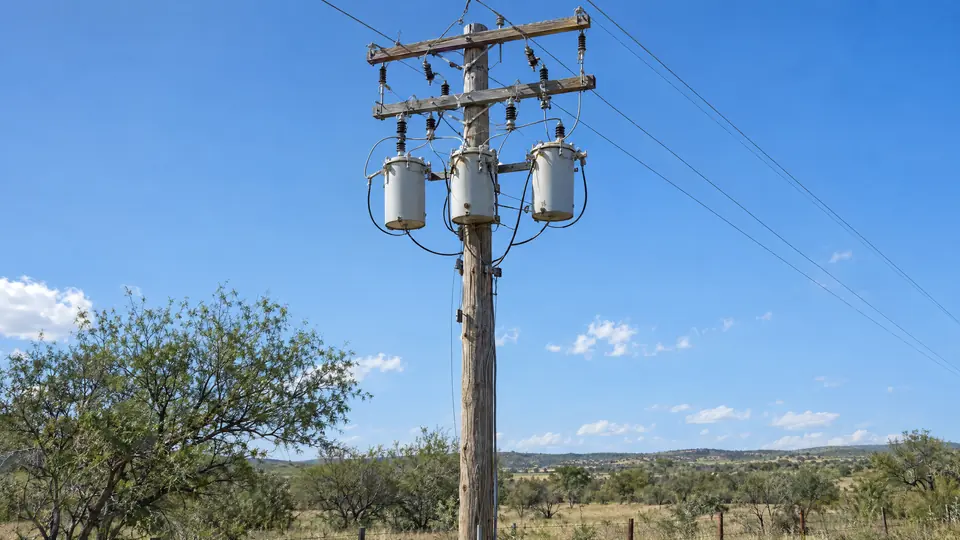
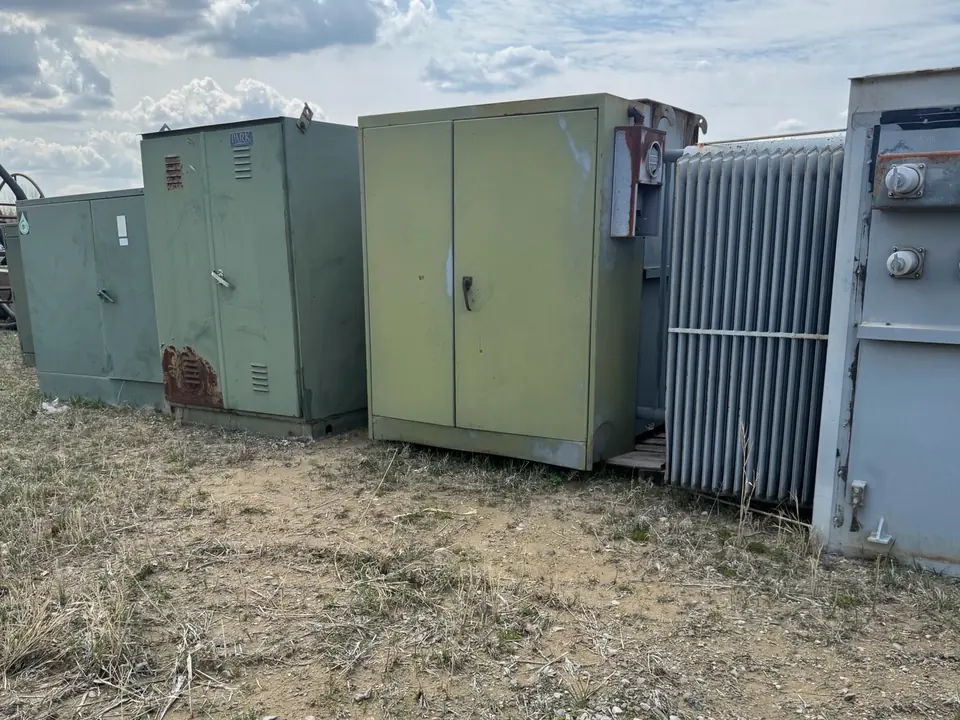
At these ratings, a single-phase unit commonly has either a cylindrical pole-mounted tank or a ground-level cabinet. Pole-mount transformers typically have mounting brackets and external bushings, which are insulated connection points. Single-phase padmounts enclose their connections in a cabinet and may use dead-front construction, with insulated cable interfaces rather than exposed energized terminals.
These transformers serve homes, farms, small businesses and rural facilities throughout Texas. Irrigation and oilfield sites may have individual units or groups of single-phase transformers connected as a bank. If you have a bank, photograph each nameplate separately; similar-looking tanks do not necessarily have matching ratings or voltages.
For a single-phase 10–167 kVA transformer in Texas, the site matters as much as the equipment description when planning pickup. We are based at 6402 McGrew St, Houston, TX 77087, and buy statewide. Include the actual equipment location and describe whether it is in a yard, beside a building or at a remote field site.
Primary and secondary voltages to identify
Primary voltage is the supply voltage entering the transformer; secondary voltage is the output serving the load. Common single-phase distribution nameplates include primary ratings such as 7,200, 7,620, 7,970 or 14,400 volts, often paired with a 120/240-volt secondary. Other combinations exist, so send the actual plate instead of identifying voltage from the tank's appearance.
A 120/240-volt secondary commonly provides 120 volts from either end to the center tap and 240 volts across the full winding. Units intended for different services or bank connections may have other secondary arrangements, including 240/480 volts. Connection diagrams, polarity markings and primary taps help establish how a particular unit can be applied.
When sending single-phase 10–167 kVA transformer specs, capture the complete voltage markings, including any slash notation and connection diagram. A system voltage shown on the plate is not always the voltage across one primary winding. Clear photos let us distinguish those details without relying on a handwritten summary.
Full-load amps and what they tell a buyer
For single-phase equipment, full-load current in amperes equals kVA multiplied by 1,000, divided by volts. At 240 volts, a 25 kVA unit is approximately 104 A, a 50 kVA unit is 208 A, a 100 kVA unit is 417 A and a 167 kVA unit is 696 A. These are calculated rated-load currents, not measurements of the unit's present operation.
The single-phase full-load amps table below this text helps compare ratings at different voltages. You can also use the transformer kVA-to-amps calculator for another nameplate voltage. For a 120/240-volt winding, use the full 240-volt rating when calculating the transformer's total rated output current; individual 120-volt loads require attention to winding balance.
Buyers care about current because it helps match equipment to a service requirement and interpret secondary connections. It does not establish condition, conductor sizing or protective-device settings by itself. A larger amp figure also does not automatically mean a more valuable transformer.
Condition, configuration and demand affect value
A used single-phase 10–167 kVA transformer is evaluated by its rating, voltage combination, configuration and documented condition. New surplus equipment, working takeouts and failed units are different buying situations. Tell us whether the transformer was operating when removed, why it was retired and whether there are known leaks, damaged bushings or missing components.
These sizes fit familiar residential, agricultural and small commercial applications, but demand depends on the specific unit. Common voltage combinations and complete, identifiable equipment can be easier to match to another application. An unusual connection arrangement, damaged cabinet or uncertain operating history changes that evaluation.
Available test reports and maintenance records help support the description. If you have oil-testing records or PCB information, include them; PCB means polychlorinated biphenyls, substances associated with some older electrical insulating fluids. Do not infer fluid status from age or appearance, and do not open the tank just to obtain information for an offer.
Nameplate photos, weight and load-out planning
Send one readable nameplate photo per distinct unit, plus overall photos showing the tank or cabinet, bushings, connections and any damage. Our guide to reading a transformer nameplate explains where to find the details. Include quantity, location and condition with the photos.
Capture the manufacturer, serial number, kVA, primary and secondary voltages, taps and connection diagram. Include impedance if shown; impedance is the transformer's opposition to current, expressed as a percentage, and matters when assessing compatibility. Photograph weight markings too: the nameplate lists exact weights, which are needed for handling plans.
Weight, lifting provisions, loading access and trailer capacity all matter, even at the smaller end of this range. Describe available lifting equipment, gate clearance, ground conditions and whether units are crated, palletized or standing loose. Equipment selection and rigging must suit the actual load, not a weight estimate based only on kVA.
The unit has to be de-energized and disconnected by the seller or the seller's qualified electrician. We coordinate freight and load-out with the seller. Tell us about loading limitations before arrangements are finalized.
Get an offer for one unit or a whole lot
To sell a single-phase transformer, call or text (951) 403-5738, email Industrial832@gmail.com, or submit your transformer details for an offer. Start with the nameplate, overall photos, quantity, condition and location. For mixed lots, identify which photos belong to which units.
We assess the information and respond with an offer. Nothing is loaded until the price, payment terms and pickup plan are confirmed in writing. Include any removal deadline or access restrictions so those requirements can be considered with the equipment.
Frequently asked questions
Can I sell just one 10 or 15 kVA pole-mount transformer?
Yes. We buy single units as well as lots, including 10 and 15 kVA pole-mounts. Send the plate and overall photos so we can assess its voltage, condition and location.
Do you buy 37.5 kVA and 167 kVA single-phase units?
Yes. Both ratings are within the range we buy. Include the exact nameplate rating rather than rounding it to a nearby size.
Should I list three banked transformers as one unit?
List the quantity as three and send each nameplate. Explain that they were connected as a bank, and include any available connection details.
Will a missing nameplate prevent me from submitting a unit?
You can submit overall photos and any records identifying the unit. Tell us the plate is missing; do not guess its kVA or voltages.
Can I submit a failed single-phase padmount with a damaged cabinet?
Yes. We buy failed equipment. Photograph the cabinet damage, connections and any leaks, and describe the known failure so we can evaluate the unit.