A dry type transformer buyer for Texas equipment
We buy dry-type transformers in the typical 15 kVA to 1,000 kVA range, including building-power units removed during renovations and unused equipment left over from projects. kVA means kilovolt-amperes, the transformer’s apparent power rating. Any brand can be submitted, with aluminum or copper windings, whether the unit is working or failed.
Our office and yard sit at 6402 McGrew St, Houston, TX 77087. We buy statewide and coordinate trucking and pickup with the seller, so equipment does not need to be delivered to Houston before we evaluate it.
To sell a dry type transformer, start with clear pictures rather than a lengthy equipment description. Call or text (951) 403-5738, email Industrial832@gmail.com, or submit your transformer details for an offer. Include every unit you want considered, even if the lot contains different sizes or conditions.
Dry-type transformers sizes we buy
Identify a dry-type transformer before sending photos
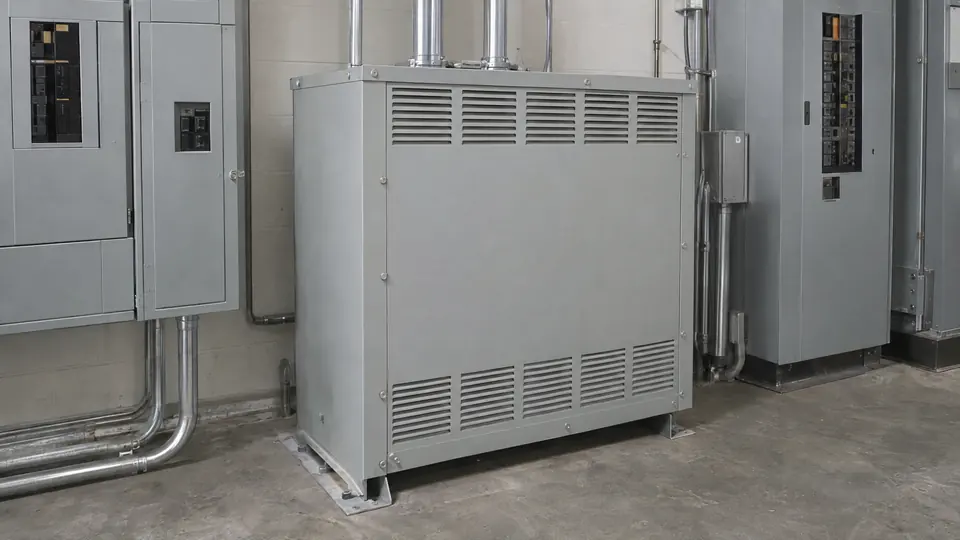
A typical ventilated dry-type transformer uses air for cooling and has no insulating liquid. Its enclosure has ventilation openings, with the core and windings inside. Common enclosure markings are NEMA 2 for indoor use and NEMA 3R for outdoor rain protection; photograph the marking rather than guessing from where the equipment was installed.
The nameplate usually lists capacity, primary and secondary voltage, frequency, temperature rise and winding information. Primary voltage is the incoming supply; secondary voltage is the output. Temperature-rise ratings of 150 °C, 115 °C or 80 °C describe winding temperature rise above ambient under rated conditions, not the room temperature.
A cast-coil unit is also dry-type, but its windings are encapsulated in resin rather than being the ordinary exposed ventilated construction. Send photos if you are unsure, or see our page for cast-coil transformer sellers.
An outdoor cabinet alone does not identify the transformer type. A padmount may contain liquid-filled equipment, while a dry-type transformer can be part of a larger assembly with switchgear. If the transformer remains attached to that assembly, include pictures of the complete unit substation equipment, not just the transformer compartment.
Sizes, voltage combinations and nameplate ratings
We evaluate dry-type units from 15 kVA through 1,000 kVA. Common sizes include 45, 75, 112.5, 150, 225, 300 and 500 kVA. For equipment-specific details, see our pages for 45 kVA units, 75 kVA transformers and 150 kVA transformers.
The most common building-power configuration is a 480 V delta primary feeding a 208Y/120 V secondary. A 480 to 208Y/120 transformer provides 208 volts between phases and 120 volts from a phase to neutral on its wye-connected secondary. Photograph the actual voltage ratings and connection diagram; similar-looking cabinets can contain different configurations.
Other voltage combinations can also be submitted. Include available tap settings, which allow adjustment for supply-voltage differences, and impedance, which describes the transformer’s opposition to current and affects fault-current calculations.
K-factor ratings indicate suitability for nonlinear loads that produce harmonic currents, such as electronic equipment. Current efficiency markings may reference DOE 2016 requirements, while older equipment may carry a NEMA TP-1 efficiency marking. Capture those markings, the manufacture date and the winding material if listed.
New surplus, used, retired and failed units
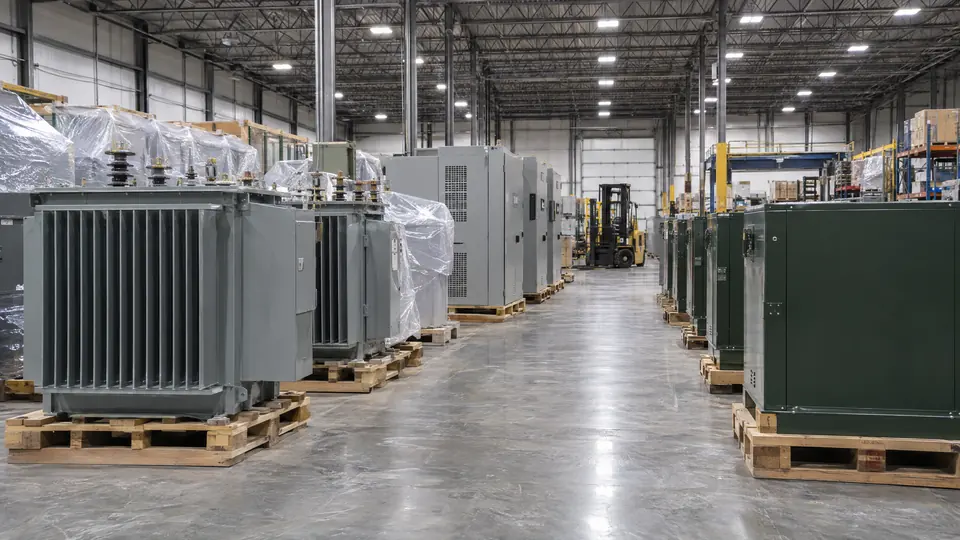
Unused dry-type transformers often remain after tenant build-outs, project changes or canceled installations. We buy new units in crates as well as unused equipment that has been unpacked or mounted. For new surplus transformer lots, show packaging, labels and any signs of storage damage.
Used dry type transformers can come from operating buildings, shutdown facilities or electrical upgrades. Tell us whether the equipment was working when removed and why it came out of service. Retired does not necessarily mean failed, and a clear removal history helps us understand the condition.
Failed units are also worth submitting. Describe overheating, damaged terminals, winding faults, moisture exposure or other known problems, and photograph the affected areas. Do not energize equipment just to demonstrate its condition, and do not hide missing panels or parts.
Single units and whole lots are both considered. For mixed inventory, separate new, used and failed units in your list so each transformer’s photos and condition can be matched to its nameplate.
Who sells dry-type transformers across Texas
Facility owners and plant managers may have transformers available after service upgrades, production changes or building closures. Electrical contractors and project managers often handle equipment removed during renovations or left over after revised electrical plans. Developers may have unused units from tenant spaces that were redesigned before occupancy.
These situations arise in Pearland, Sugar Land, Katy, The Woodlands and Conroe, as well as Dallas, Arlington and Plano. We also buy equipment from utility and co-op facilities and oilfield support buildings anywhere in Texas. Send the actual equipment location, not just your billing address.
If you need a general purpose transformer buyer for a warehouse, office, retail space or shop, include the whole available inventory. Units stored at multiple properties should be listed by pickup location, with a contact who can explain access at each site.
What drives the offer on your equipment
As a dry type transformer buyer, we consider more than cabinet size or winding metal. Capacity, voltage combination, age, brand, efficiency markings and condition help establish what the equipment is and how it can be evaluated. Clear identification is especially important when several similar units have different ratings.
Available electrical test reports help document condition, but you can submit equipment without them. Attach reports to the correct serial number and identify any known defects. Include accessories such as enclosure panels, terminal covers, mounting hardware and other parts that belong with the unit.
PCB means polychlorinated biphenyls, a concern associated with certain older insulating liquids. Ordinary ventilated dry-type transformers have no insulating liquid, so liquid testing information is not normally applicable. Still, send any PCB labels or documentation associated with the equipment, especially if the lot includes other transformer types.
Quantity, location and load-out access also affect the offer. Ground-level equipment beside a truck-accessible door presents different handling requirements from a unit in a basement or upper-floor electrical room. Our guide to factors affecting used transformer value explains why complete equipment and site details matter.
Exactly what to send for a quote
Send one organized message or equipment list with the items below. For multiple units, use simple labels such as Unit A and Unit B so the nameplate, overall photos and condition notes stay together.
- A readable nameplate photo for each unit, showing kVA, voltages, brand, serial number and manufacture date where available.
- Overall photos from several sides, including the enclosure, terminals where safely accessible, packaging and any visible damage.
- Quantity and condition: new surplus, used, retired or failed, plus whether each used unit was working when removed.
- The equipment’s Texas location, whether it is still installed, and any available test reports or accessory details.
- Load-out information: approximate weight if documented, floor level, door access, truck approach and available handling equipment.
Written terms, pickup and freight
We evaluate the details and respond with an offer. Before any equipment leaves the site, the price, payment method and pickup details are put in writing. Identify which units are included so there is no confusion when the shipment is prepared.
The seller, or the seller’s qualified electrical contractor, must de-energize and disconnect the equipment. We schedule the freight and load-out together with the seller. Tell us about stairs, elevators, tight doorways or restricted truck access before pickup arrangements are finalized.
Keep nameplates and loose accessories with their matching units, and explain whether equipment is crated, palletized or standing loose. For surplus dry transformers stored across several sites, provide an inventory by location so the freight plan reflects the actual load.
Frequently asked questions
Will you buy a dry-type transformer without test reports?
Yes. Send the nameplate, overall photos and known operating history. Tell us whether it worked when removed or has a known failure. Existing reports are useful, but you do not need them to submit a unit for an offer.
Do you buy units with blown fuses or missing parts?
We buy failed equipment and consider units with missing parts. Describe whether the blown fuse belongs to associated switchgear and show any damage. Elbow connectors are more typical of certain medium-voltage equipment, so include photos if those are involved rather than assuming the unit is a general-purpose dry-type.
How much does a dry-type transformer weigh?
Weight varies by kVA, winding material, enclosure and design. Use a nameplate weight, manufacturer documentation or a documented shipping weight when available. Do not estimate lifting requirements from capacity alone; send dimensions and photos if the weight is unknown.
Can I sell an older unit marked NEMA TP-1?
Yes, older units can be submitted. Photograph the TP-1 marking, manufacture date and complete nameplate. Age and efficiency information are considered along with voltage, capacity, condition and pickup requirements.
Can you evaluate a transformer that is still installed?
Yes. A dry type transformer buyer can evaluate photos and equipment details before removal. Tell us it is still installed and describe access. The seller or qualified electrical contractor must handle de-energization and disconnection before the coordinated load-out.