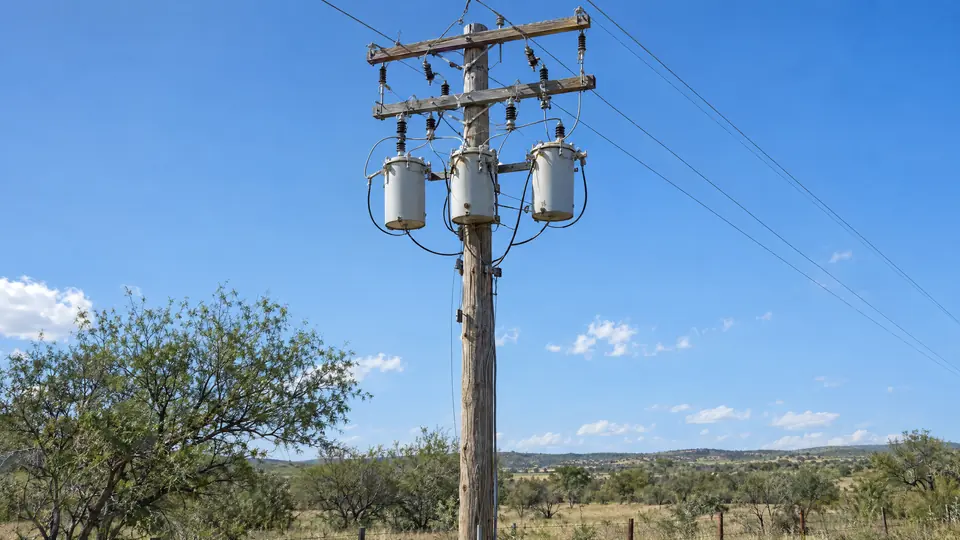
A pole mount transformer buyer for Texas sellers
We buy single overhead distribution transformers and whole lots, including conventional and completely self-protected units. Any brand is welcome, whether the equipment is new in a crate, recently removed from service or failed. Typical single-phase pole-mount ratings run from 10 kVA to 167 kVA.
Our base of operations is 6402 McGrew St, Houston, TX 77087. We buy across Texas and coordinate trucking and pickup with the seller. You do not need to bring your transformers to Houston before requesting an offer.
To sell pole transformers, call or text (951) 403-5738, email Industrial832@gmail.com, or send your transformer details for an offer. Start with clear photos and the equipment location rather than arranging a shipment first. That lets us assess the units and discuss the load-out before anything moves.
Pole-mount transformers sizes we buy
Identify pole-mount cans and related transformer types
Pole-mount transformers are cylindrical overhead distribution transformers hung on wooden or steel poles. Their mounting hardware and overhead connection arrangement distinguish them from ground-level cabinet equipment. Photograph the entire can, its bushings, mounting brackets and nameplate so we can identify what you have.
Conventional units and CSP units both belong in this category. CSP means completely self-protected; these units include an internal breaker and arrester. If you need a CSP transformer buyer, include photos of the external operating hardware and any available information about the protection components.
Pole-mount units differ from single-phase pad-mounted transformers, which sit at ground level in cabinets. Pad-mounted equipment may use dead-front connections, where energized connection points are shielded rather than exposed. Elbow connectors are associated with those cable connections, so a missing elbow may indicate you have a different transformer type.
These overhead distribution units are built to IEEE C57.12.20, a standard for this equipment category. Three single-phase cans can also be banked together to serve three-phase loads, such as oilfield pumps or irrigation wells. Tell us whether your units came from a bank and whether all three are available.
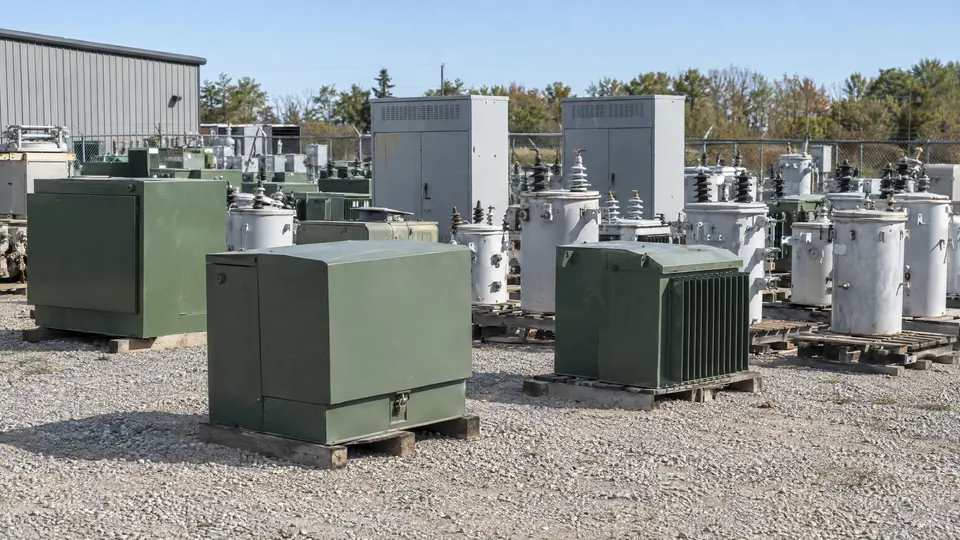
Sizes, voltage ratings and single-phase banks we buy
Common pole-mount sizes include 10, 15, 25, 37.5, 50, 75, 100 and 167 kVA. The kVA rating describes the transformer's apparent-power capacity, not its physical weight. Our single-phase transformer size page covers the 10–167 kVA range if you are sorting units by capacity.
Send the primary and secondary voltage exactly as shown on the nameplate. Primary voltage identifies the supply side; secondary voltage identifies the output side. Include any listed taps, which are selectable winding connections used to adjust the voltage ratio, rather than describing a unit only as high voltage or low voltage.
For a three-can bank, photograph each nameplate separately and identify which units belong together. Ratings, voltage information and condition should be recorded for every can, even when they look alike. If your inventory includes a unit marked 45 kVA, include it too; see our 45 kVA transformer buying page rather than assuming it matches the common pole-mount sizes.
New surplus, used, retired and failed pole transformers
New surplus may come from canceled projects, excess inventory or equipment purchased for work that changed scope. Send crate photos along with the nameplate, and tell us whether the unit has ever been installed. Packaging alone does not establish its service history.
We also buy used pole mounted transformers removed during upgrades, line changes, facility closures or equipment replacement. Describe whether each unit was working when removed, retired without a known fault or taken out after a failure. Keep those categories separate when offering a mixed lot.
Failed equipment is still worth submitting for an offer. Report blown fuses, damaged bushings, missing parts, visible leaks or known internal faults without attempting to diagnose more than you know. If you are considering pole transformer scrap, our scrap transformer buying page explains that route for equipment being offered as scrap.
Texas sellers and common reasons for removal
Utility and co-op staff may have retired distribution stock or units removed during system changes. Electrical contractors may hold equipment after replacement jobs, while developers and facility owners may have surplus from completed or redesigned projects. Plant managers and oilfield operators may also have single cans or banks no longer needed for a load.
Pole-mount equipment comes up in communities including Conroe, League City, Galveston, Fort Worth, McKinney, Denton, Corsicana and Wichita Falls. See our information for transformer sellers in Conroe while preparing a lot from that area. Pickup coordination starts with the actual equipment address, not just the nearest city.
An overhead distribution transformer buyer needs to know whether the equipment is still on poles, staged in a yard or stored inside a facility. Explain why it was removed and what records stayed with it. That context helps distinguish unused inventory from working takeouts and failed units.
What drives a pole mount transformer buyer's offer
The offer depends on the equipment details and the practical cost of moving it. Rating, primary and secondary voltage, age, brand and condition all matter. Quantity also matters: a single identified unit and a mixed lot of undocumented cans require different assessments.
Available test reports help establish condition, but you can submit equipment without them. Include report dates and identify which serial number each report covers. Nameplate impedance, the transformer’s opposition to current expressed as a percentage, is another useful detail when shown.
For units made before 1979, PCB status needs to be confirmed. PCB means polychlorinated biphenyls, substances historically associated with some insulating fluids. Send available oil-test results or documentation tied to the unit, and clearly identify older equipment whose status is not yet confirmed.
Accessories, intact bushings, mounting hardware and known missing parts also affect the assessment. Location and load-out access matter because freight must fit the equipment and site. Our guide to what affects used transformer value provides more context without treating every can as having the same value.
Exactly what to send for a quote
A complete photo set gives us more useful information than a list of capacities alone. Make nameplate lettering readable, and match each set of photos to a unit number when offering multiple transformers. Our guide to reading a transformer nameplate can help you locate the key fields.
- A clear nameplate photo for each unit, showing kVA, primary and secondary voltage, manufacturer, serial number and manufacturing date when listed.
- Overall photos from several sides, including bushings, mounting brackets, protection hardware, crates and any visible damage or leaks.
- Quantity, equipment address and condition for each unit: new surplus, used and working, retired, failed or unknown.
- Available test reports, PCB documentation and a list of missing accessories or known problems.
- Storage position, available loading equipment, truck access restrictions and whether the units still need to be taken down from poles.
Pickup, freight and load-out arrangements
We assess your details and respond with an offer. Nothing is loaded until the price, payment terms and pickup plan are confirmed in writing. Include any site scheduling requirements or access restrictions early so they can be addressed in those arrangements.
The unit has to be de-energized and disconnected by the seller or the seller's qualified electrician. We coordinate freight and load-out with the seller. For pole-mounted units, identify who will handle removal from the poles and where the disconnected cans will be staged.
Tell us whether the site has suitable loading equipment and share nameplate weight information when available. Photos of the staging area and truck approach help establish the pickup requirements. Do not estimate lifting needs from kVA alone; capacity and shipping weight are different measurements.
Frequently asked questions
Will you buy pole transformers with blown fuses?
Yes, we buy failed units as well as working equipment. Identify the blown fuse and any other known damage, and send nameplate and overall photos. A blown fuse alone does not establish the condition of the windings or protection components.
Can I get an offer without test reports?
Yes. Send the nameplate, photos, quantity, location and known condition, and tell us that reports are unavailable. Include the service history you do know rather than describing an untested unit as tested or confirmed working.
How much does a pole-mount transformer weigh?
Weight varies by rating, design and construction. Use the nameplate weight or manufacturer documentation when available, and send that information with the photos. Do not select loading equipment based only on the kVA rating or the can's apparent size.
Do you buy a three-phase bank of three single-phase cans?
Yes, we buy single units and whole lots, including three-can banks. Send a separate nameplate photo and condition description for each can. Tell us whether the bank served the same load and whether any unit was replaced separately.
Can I offer older transformers with unknown PCB status?
Send the details and identify the unknown status plainly. Units made before 1979 need PCB status confirmed. Include any existing test results or records tied to the serial number so the documentation can be assessed with the equipment.