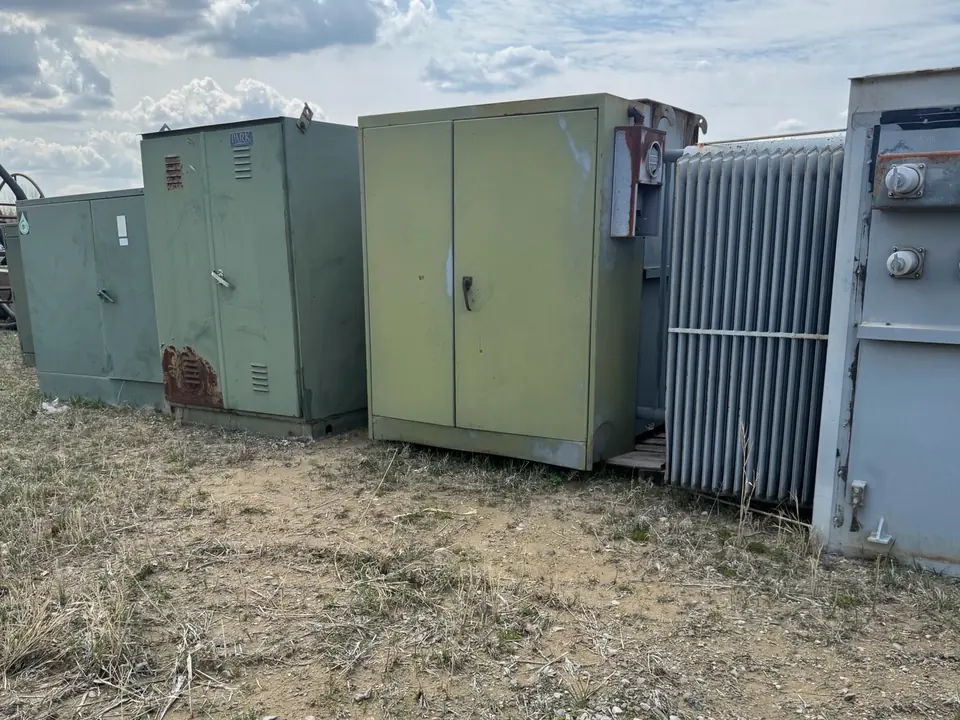
Scrap transformer buyers for failed and damaged equipment
A transformer does not have to operate to be worth evaluating. We buy new surplus, used, retired and failed units, including equipment removed after fire, flooding, storm damage or an electrical fault. Any brand and any condition can be submitted, from small distribution units to large power transformers.
Scrap describes a possible recovery route, not a transformer design. A pole-mount, padmount or substation transformer may become a scrap candidate when damage, age or replacement plans make continued service impractical. Copper or aluminum windings, core steel and tanks can retain value even when the equipment no longer works.
Some failed units are worth more as rewind or repair cores than as material scrap. That is why intact equipment, clear identification and an accurate description matter. Before dismantling a unit to sell scrap transformers, send photos so we can assess it as a complete asset.
Scrap transformers sizes we buy
Identify the transformer and describe what happened
Start with the nameplate and the physical arrangement. Pole-mount units usually have a cylindrical tank and mounting hardware, while padmount units have a ground-level enclosure with cable compartments. Larger substation equipment commonly has separate bushings, radiators and other external components; these construction differences remain relevant after failure.
A failed transformer is not necessarily the same as an obsolete or retired one. Retired equipment may have been working when removed, while obsolete equipment may simply no longer match the site's requirements. A blown fuse or damaged cable connection also does not, by itself, establish the condition of the internal windings.
Tell us whether the unit stopped operating, was removed during an upgrade or suffered visible damage. For a storm damaged transformer, describe flooding, impact damage, broken bushings or tank deformation separately. Photos of the tank, bushings and damaged areas help us distinguish what is visible from what still needs documentation.
For liquid-filled equipment, note leaks and the oil information shown on the label. Our oil-filled transformer buying page covers that equipment category, including units that are no longer in service.
Sizes, ratings and voltages we buy
We buy from 10 kVA pole-mount units to large MVA substation and power transformers. kVA means kilovolt-amperes and MVA means megavolt-amperes; both describe electrical capacity, not weight. Failed units of any size can be submitted, whether you have one transformer or a mixed lot.
Send the primary and secondary voltage ratings exactly as shown on the nameplate. The primary is the input-side rating, and the secondary is the output-side rating. Include phase, frequency and impedance if legible; impedance describes the transformer's opposition to current and helps identify its electrical characteristics.
Smaller equipment can be compared with our single-phase 10–167 kVA range. We also buy common commercial and industrial capacities, including 500 kVA transformers, 1500 kVA units and 2500 kVA transformers. Those ratings are examples, not limits.
Do not estimate voltage from the building service or cable appearance if the plate is unreadable. Send the best available photos and any equipment records instead. On larger units, include every listed cooling rating rather than reporting only the highest capacity.
Who sells failed transformers across Texas
Facility owners and plant managers may have failed equipment left after an outage, a replacement project or a site shutdown. Electrical contractors may be managing removed units for a customer, while utilities and co-ops may have retired distribution equipment accumulated in a yard. Developers and oilfield operators can also have transformers displaced by changing power requirements.
Houston, Pasadena, Deer Park and La Porte have industrial and commercial sites where damaged or retired equipment needs a clear removal plan. Sellers in League City, Texas City and Galveston may also have storm-affected equipment to sell. Garland sellers and those elsewhere in Texas can submit the same information without bringing the unit to Houston first.
Our yard and office are at 6402 McGrew St, Houston, TX 77087, and we buy statewide. Whether equipment is at an operating plant, a contractor's yard or a closed facility, tell us who controls its release and where it is stored. That information helps connect the offer with a workable pickup plan.
What drives an offer on scrap or failed transformers
As scrap transformer buyers, we assess both the equipment's possible reuse and its recoverable materials. Rating, primary and secondary voltages, age, brand and condition help establish what the unit is. Quantity and consistency matter too: a lot of matching units presents different information than a collection of unidentified damaged tanks.
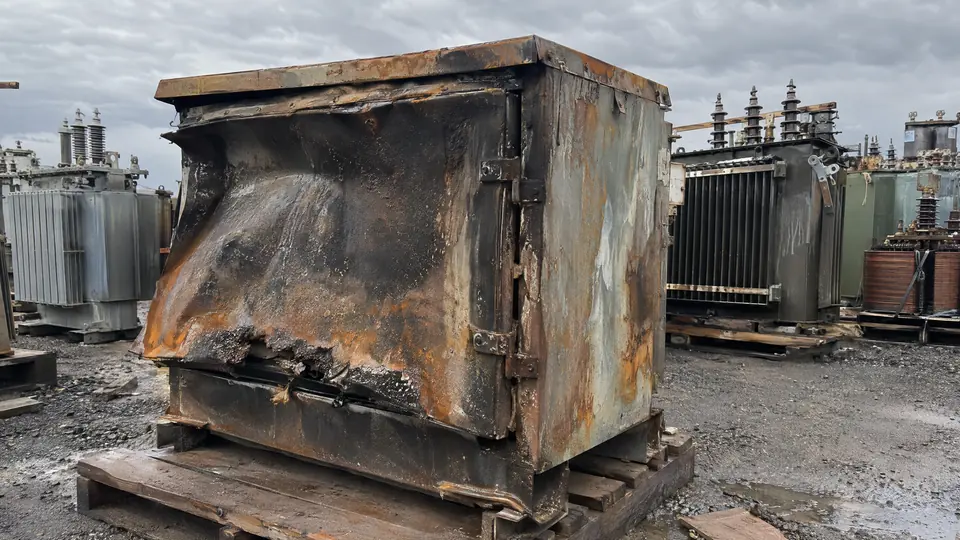
Burnt transformer scrap value cannot be determined from capacity alone. Fire damage, missing components, winding material and the condition of the tank and core all affect the evaluation. An intact repair candidate can have a different value basis from a dismantled unit, as explained in our guide to scrap value versus resale value.
Send available test reports, oil records and a list of accessories still present. Bushings, radiators, fans, cable connections and other components help describe completeness. PCB status also matters: PCBs are polychlorinated biphenyls, substances that may be present in some older insulating fluids, and status must be confirmed by label or laboratory test before scrapping.
Location and load-out access affect the practical side of an offer. A unit beside an accessible loading area is different from one inside a building or behind restricted gates. Describe access accurately so price, payment terms and pickup details can be agreed in writing before anything is loaded.
Send these details for a quote
Photos of the nameplate, tank, bushings and damage are enough for an initial assessment. Include the information below so we can understand the equipment and its location without guessing. For multiple units, identify which photos belong to each transformer.
- A readable nameplate photo, plus overall photos showing the full unit and all sides you can safely access.
- Close-up photos of burned areas, flood exposure, leaks, broken bushings, missing parts or other visible damage.
- Quantity, brand, rating and voltage information, along with whether each unit is new surplus, used, retired or failed.
- The city and pickup address, current storage arrangement, available weight information and any access or loading restrictions.
- Available test reports, PCB labels or laboratory results, accessories included and a contact responsible for the sale.
Pickup, freight and electrical preparation
Before pickup, the seller or a qualified electrical contractor hired by the seller must de-energize and disconnect the unit. We coordinate trucking and load-out with the seller. Tell us whether the transformer is still installed, already removed or stored with other equipment so the pickup arrangement reflects its actual status.
Oil must be handled properly, and PCB status must be established before scrapping. Report leaks, missing labels and any existing laboratory results when submitting the equipment details. Do not drain a transformer merely to prepare an initial quote; submit its current condition and records first.
For freight planning, provide the recorded weight and dimensions when available, along with photos of the route to the loading area. Identify gates, overhead restrictions, soft ground or equipment blocking access. Price, payment terms and pickup details are settled in writing before loading begins.
Start an offer without dismantling the unit
Call or text (951) 403-5738, email Industrial832@gmail.com, or submit your transformer details for an offer. Send your photos, quantity, location and condition, and we will evaluate the details and respond with an offer. You can submit one failed unit or an entire lot.
Keep the description straightforward: what the equipment is, what happened to it and what remains attached. If a detail is unknown, identify it as unknown rather than estimating. Clear information gives us a useful starting point for assessing the transformer and coordinating its removal.
Frequently asked questions
Do scrap yards take transformers?
Many general scrap yards will not accept oil-filled transformers, which is why sellers contact a specialist failed transformer buyer. Fluid handling and PCB status need attention before scrapping. Send us the nameplate, overall photos and condition details for an assessment of the complete unit.
Do you buy units with blown fuses or missing elbows?
Yes, we buy failed and incomplete units. Elbows are detachable cable connectors commonly used on padmount equipment. Photograph the missing or damaged parts and explain any known fault; a blown fuse alone does not establish whether the transformer itself has failed.
Can I get an offer without test reports?
Yes. Nameplate, tank, bushing and damage photos are enough for an initial assessment. Send any reports you have, but do not invent operating history or test results. PCB status still needs confirmation by label or laboratory test before scrapping.
How much does a failed transformer weigh?
Weight depends on the design, rating, tank, core and fluid content, so kVA alone is not a reliable shipping weight. Check the nameplate, drawings or equipment records. Tell us whether the listed weight includes fluid and whether components have been removed.
Should I strip the copper before contacting you?
Send photos before dismantling. Some failed transformers have more value as repair or rewind cores than as scrap, and stripping removes that option. An intact nameplate and attached components also make identification and condition assessment easier.