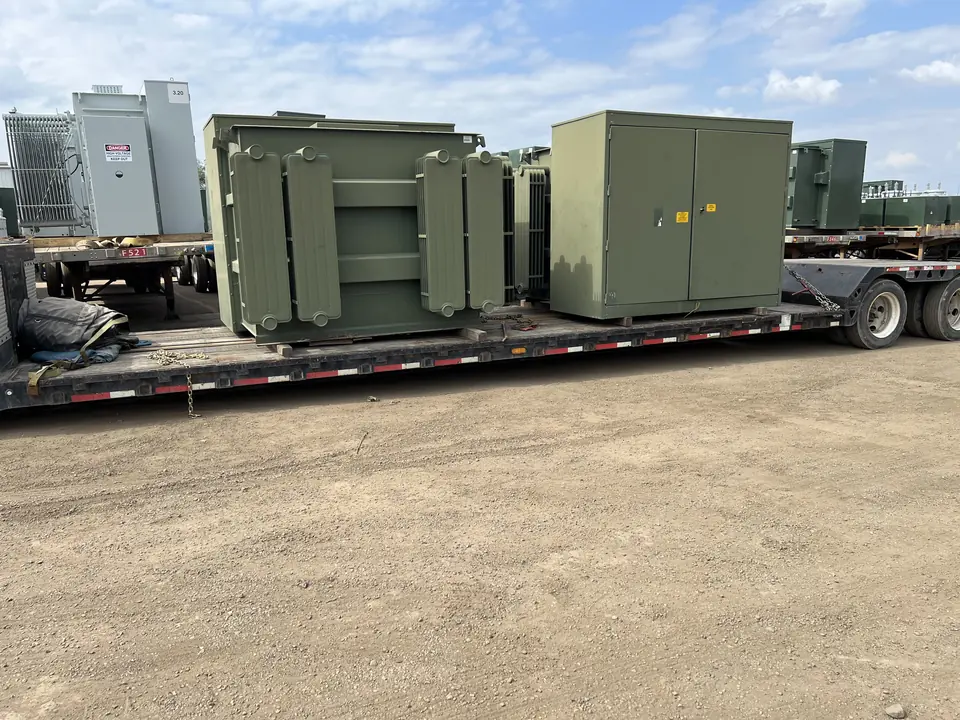
- 45 kVA
- 75 kVA
- 112.5 kVA
- 150 kVA
- 225 kVA
- 300 kVA
- 500 kVA
- 750 kVA
- 1000 kVA (1 MVA)
- 1500 kVA
- 2000 kVA (2 MVA)
- 2500 kVA
- 3000 kVA (3 MVA)
- 3750 kVA
- 5000 kVA (5 MVA)
- 7500 kVA (7.5 MVA)
- 10 MVA
- 20 MVA
- Single-phase 10–167 kVA
Transformer kVA sizes we buy across Texas
We buy single transformers and whole lots, any brand, whether new in a crate, used and working, retired or failed. This size hub covers 45 kVA through 20 MVA equipment, plus single-phase units from 10–167 kVA. A rating outside the sizes shown here is still worth submitting for consideration.
Common commercial and industrial ratings include 75, 112.5, 150, 225, 300, 500 and 750 kVA. Larger equipment includes 1,000 through 7,500 kVA units and 10 or 20 MVA transformers. The cards on this page connect you with individual size pages without requiring you to identify the transformer type first.
For smaller equipment, see our pages for 75 kVA transformers and single-phase transformer sizes. We are based at 6402 McGrew St, Houston, TX 77087, and buy from sellers statewide while coordinating trucking and pickup.
What kVA and MVA tell you
kVA means kilovolt-amperes, a measure of apparent power capacity. MVA means megavolt-amperes: 1 MVA equals 1,000 kVA. A transformer marked 1,000 kVA therefore has the same apparent-power rating as one marked 1 MVA; the units do not describe different equipment categories.
For reference, 1,500 kVA is 1.5 MVA, 2,500 kVA is 2.5 MVA, and 5,000 kVA is 5 MVA. You can explore 1,000 kVA and 1 MVA equipment using either nameplate convention. Keep the original rating visible in the photo rather than rewriting it from memory.
kVA is not the same as kW, or kilowatts of real power. The relationship depends on power factor, which describes how effectively apparent power becomes real power. A kVA rating alone also does not establish the transformer's voltage, phase, physical dimensions or suitability for a particular installation.
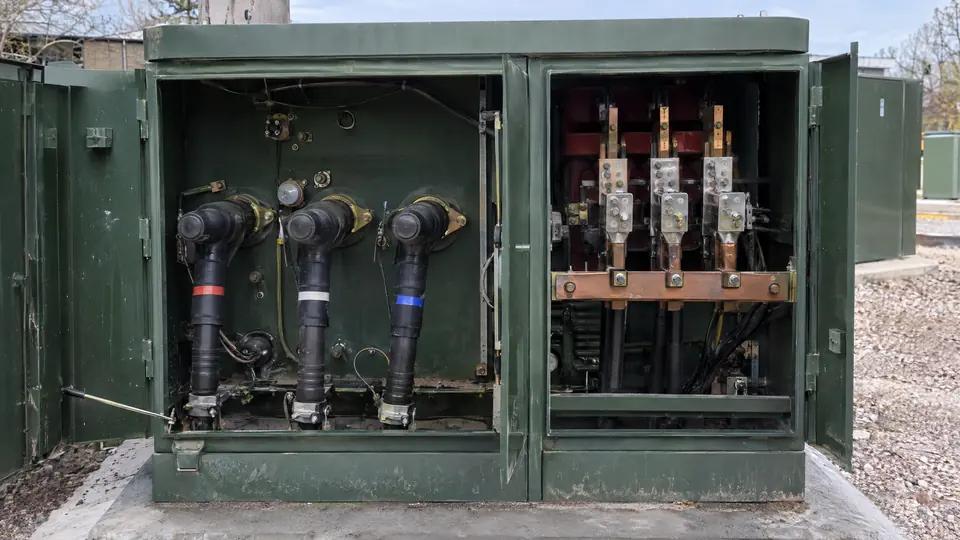
| kVA | 208 V | 240 V | 480 V | 600 V | 4,160 V | 12,470 V | 13,800 V |
|---|---|---|---|---|---|---|---|
| 45 kVA | 125 | 108 | 54 | 43 | 6 | 2 | 2 |
| 75 kVA | 208 | 180 | 90 | 72 | 10 | 3 | 3 |
| 112.5 kVA | 312 | 271 | 135 | 108 | 16 | 5 | 5 |
| 150 kVA | 416 | 361 | 180 | 144 | 21 | 7 | 6 |
| 225 kVA | 625 | 541 | 271 | 217 | 31 | 10 | 9 |
| 300 kVA | 833 | 722 | 361 | 289 | 42 | 14 | 13 |
| 500 kVA | 1,388 | 1,203 | 601 | 481 | 69 | 23 | 21 |
| 750 kVA | 2,082 | 1,804 | 902 | 722 | 104 | 35 | 31 |
| 1000 kVA | 2,776 | 2,406 | 1,203 | 962 | 139 | 46 | 42 |
| 1500 kVA | 4,164 | 3,608 | 1,804 | 1,443 | 208 | 69 | 63 |
| 2000 kVA | 5,551 | 4,811 | 2,406 | 1,925 | 278 | 93 | 84 |
| 2500 kVA | 6,939 | 6,014 | 3,007 | 2,406 | 347 | 116 | 105 |
| 3000 kVA | 8,327 | 7,217 | 3,608 | 2,887 | 416 | 139 | 126 |
| 3750 kVA | 10,409 | 9,021 | 4,511 | 3,608 | 520 | 174 | 157 |
| 5000 kVA | 13,879 | 12,028 | 6,014 | 4,811 | 694 | 231 | 209 |
Transformer sizes chart by equipment type
Size helps narrow down the equipment, but it does not identify the construction. A 500 kVA unit might be a dry-type transformer installed inside a building or an oil-filled padmount serving an outdoor distribution system. Photos and the nameplate distinguish these configurations.
Use the following groupings as orientation, not as strict boundaries. Manufacturers build overlapping capacities across different transformer types, and voltage requirements can change the configuration substantially.
- Single-phase 10–167 kVA: commonly associated with pole-mounted distribution equipment. Confirm whether the stated rating belongs to one transformer or an entire bank of units.
- 45–300 kVA: often encountered in building distribution, smaller commercial services and dry-type installations. Enclosure style and primary and secondary voltages remain important.
- 500–2,500 kVA: found in padmount and industrial distribution applications. See 500 kVA equipment for a dedicated size page.
- 3–20 MVA: capacities associated with larger industrial, substation and power equipment. Our 5 MVA transformer page covers one size within this broader group.
Full-load amps depend on voltage and phase
Full-load current is the current corresponding to rated apparent power at a specified voltage. For single-phase equipment, amps equal kVA multiplied by 1,000, divided by volts. For three-phase equipment, divide kVA multiplied by 1,000 by approximately 1.732 times the line-to-line voltage.
For example, a 500 kVA three-phase transformer rated at 480 volts has a calculated full-load secondary current of approximately 601 amps. That same kVA rating at 208 volts corresponds to approximately 1,388 amps. The capacity has not increased; the lower voltage requires more current.
Primary voltage is the supply-side voltage, while secondary voltage is the load-side voltage. Calculate each side separately using its rated voltage. Our kVA-to-amps calculator and chart helps with these conversions, but calculated current is not a substitute for nameplate limits or an electrical design assessment.
Which sizes have the strongest demand in Texas?
There is no reliable statewide ranking based on kVA alone. Commercial facilities, industrial plants, utilities, construction projects and oilfield operations need different capacities and voltage combinations. A familiar size can still be a poor match when its voltage or configuration does not fit the intended installation.
Ratings such as 500, 750, 1,000, 1,500 and 2,500 kVA serve a broad range of distribution applications. Larger MVA equipment serves more specialized requirements, where voltage, cooling arrangement, condition and transport needs carry substantial weight. These application ranges should not be mistaken for a current demand or price ranking.
When comparing transformer kVA sizes, include the specifications that make the unit usable. Impedance, usually expressed as a percentage, describes how strongly the transformer limits current and affects voltage regulation. Clear documentation gives us more to evaluate than a capacity number alone.
Find the rating and photograph the nameplate
Look for a metal identification plate on the enclosure or tank, commonly near an accessible exterior panel. Find the field labeled kVA, MVA, rated power or capacity. Photograph the entire plate straight on, with enough light to read the voltage ratings, phase, manufacturer and serial number.
Some larger oil-filled transformers show more than one capacity tied to cooling. ONAN means oil natural, air natural cooling; ONAF means oil natural, air forced cooling using fans. Send all listed ratings rather than selecting only the highest number.
Take overall photos showing the enclosure, connection compartments, radiators and visible damage where safely accessible. Do not open energized compartments to obtain pictures. Existing drawings, test records and weight information can help describe the unit, especially for equipment that requires substantial freight planning.
Send your transformer details for an offer
To sell a kVA transformer, send a nameplate photo, overall photos, quantity, location and condition. Call or text (951) 403-5738, email Industrial832@gmail.com, or submit your transformer for an offer. Tell us whether it is working, failed, retired or unused.
If you need an MVA transformer buyer for a larger unit, include available dimensions, weight and site-access details. We assess the equipment information and respond with an offer. Nothing is loaded until the price, payment terms and pickup plan are confirmed in writing.
De-energizing and disconnecting the transformer is handled by the seller or the seller's qualified electrical contractor. We coordinate freight and load-out with the seller, including access and loading arrangements appropriate to the unit.
Frequently asked questions
Can I sell a transformer if I only know its kVA?
Start with that rating, but send photos so we can identify the other specifications. Voltage, phase, construction and condition help distinguish units with the same capacity. If the nameplate is damaged or unreadable, say so and provide the clearest available equipment photos.
Is 2,000 kVA the same as 2 MVA?
Yes. Divide kVA by 1,000 to convert it to MVA, or multiply MVA by 1,000 to convert it to kVA. This changes how the capacity is expressed, not the transformer's voltage, phase or construction.
Do you buy failed transformers and mixed-size lots?
Yes. We buy working or failed transformers, single units or whole lots, including lots with different capacities and brands. Identify each unit separately when possible and describe known failures so the photos and nameplate information can be matched to the right equipment.
Does a larger kVA rating always mean a higher offer?
No. Capacity is only part of the evaluation. Voltage configuration, type, condition, available documentation and pickup requirements also matter. Send the actual equipment details rather than estimating value from size alone.