Sell a 150 kVA transformer from your Texas property
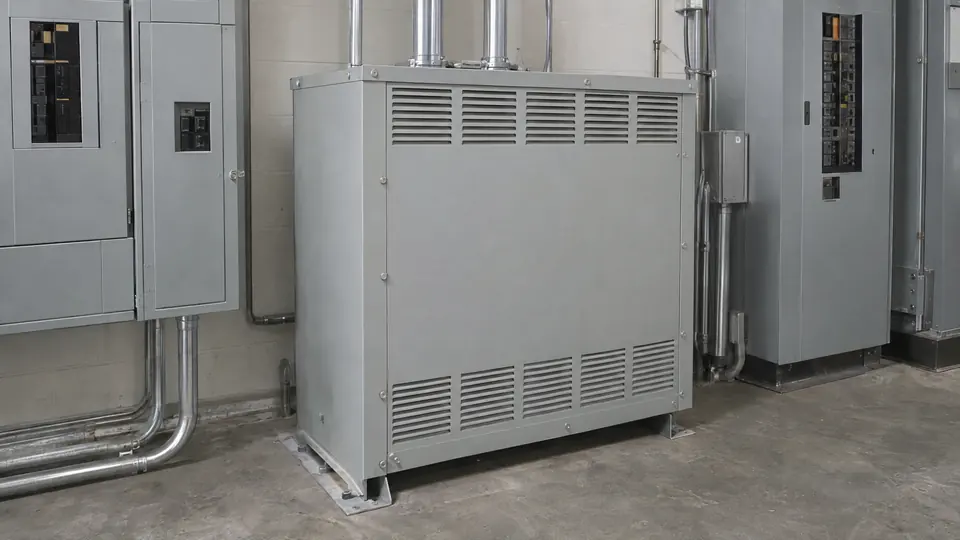
We buy single transformers and whole lots, any brand, whether the equipment is new in a crate, still installed, stored after a project or out of service after a failure. At this size, sellers commonly have a dry-type transformer inside a building or a three-phase padmount outside.
A 150 kVA rating describes apparent power capacity, not the equipment’s physical size or voltage. These units often serve strip centers, schools, churches and small plants, supplying lighting, receptacles, HVAC equipment or smaller production loads. Texas renovation projects, facility closures and service upgrades can leave a usable unit without a place in the next electrical plan.
Our office and yard sit at 6402 McGrew St, Houston, TX 77087. We buy across Texas and coordinate trucking and pickup, so the equipment does not need to be in Houston for you to request an offer.
| Voltage | Full-load amps | Typical role |
|---|---|---|
| 208 V | 416 A | Low-voltage secondary |
| 240 V | 361 A | Low-voltage secondary |
| 480 V | 180 A | Low-voltage secondary |
| 600 V | 144 A | Low-voltage secondary |
| 12,470 V | 7 A | Distribution primary / secondary |
| 13,800 V | 6 A | Distribution primary / secondary |
| 24,940 V | 3 A | Distribution primary / secondary |
| 34,500 V | 3 A | Distribution primary / secondary |
Check any rating with the kVA to amps calculator.
Common dry-type and padmount configurations
A dry-type unit uses air rather than an insulating-liquid tank system and commonly has a ventilated metal enclosure. A familiar three-phase arrangement is 480 V primary to 208Y/120 V secondary. Primary means the incoming supply; secondary means the output, and 208Y/120 V identifies a wye-connected output providing 208 V between phases and 120 V from phase to neutral.
Other configurations include 600 V primary to 208Y/120 V secondary or equipment designed for a particular facility supply. Our information on selling dry-type transformers covers this category. Photograph the enclosure and terminals as well as the plate, because construction and connection details matter.
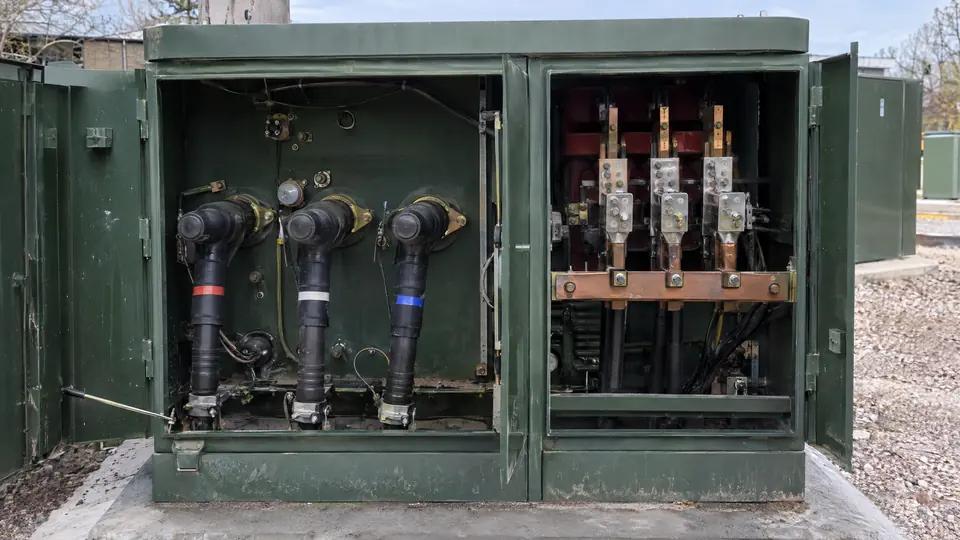
A three-phase padmount generally has a locked outdoor cabinet containing an insulating-liquid tank and separate cable compartments. Utility-side primary voltages may include 12,470, 13,800, 24,940 or 34,500 V, with secondaries such as 208Y/120 or 480Y/277 V. Not every primary-secondary pairing is equally common, so use the actual plate rather than assuming the configuration.
For padmount transformer evaluations, note whether connections are dead-front, with shielded insulated cable interfaces, or live-front, with exposed energized connections inside the compartment. Also identify loop-feed equipment, which has connections allowing the primary circuit to continue to another unit.
150 kVA transformer specs and full-load amps
For three-phase equipment, full-load current equals kVA multiplied by 1,000, divided by 1.732 times the line-to-line voltage. The table below shows rounded currents for a 150 kVA rating: approximately 416 A at 208 V, 180 A at 480 V and 144 A at 600 V.
On the medium-voltage side, the rounded values are approximately 7 A at 12,470 V, 6 A at 13,800 V and 3 A at either 24,940 or 34,500 V. Those last two figures round to the same whole amp, but their calculated currents differ. Use the transformer kVA-to-amps calculator when you need another voltage or more precise figures.
Buyers care about current because voltage and capacity must fit the next application. A 150 kVA unit delivering 208 V carries substantially more secondary current than one delivering 480 V. These calculations describe rated full-load current, not measured consumption or instructions for sizing breakers, conductors or protection.
What affects value and demand at 150 kVA
A 150 kVA transformer buyer needs to know whether the equipment matches a practical reuse application or should be evaluated as failed equipment. Voltage combination, phase, construction, winding material, condition and completeness all affect that assessment. Missing covers, damaged bushings, water exposure or altered connections can change the evaluation.
This capacity can fit smaller commercial buildings and plant support loads, making configuration important to demand. A familiar voltage arrangement may suit more projects than a specialized design, but rating alone does not establish value. Demand also depends on available replacement equipment and the requirements of a prospective installation.
For a used 150 kVA transformer, provide any available maintenance records, test results and an explanation of why it was removed. If it failed, describe the event and visible damage instead of labeling it simply as scrap. New surplus units should have photos showing crate condition, labels and any storage exposure.
If your project includes other sizes, we also evaluate 112.5 kVA units and 225 kVA transformers. Keep each unit’s photos and specifications together so similar-looking equipment does not get mixed up.
Nameplate details and photos to send
Start with a sharp, straight-on nameplate photo that remains readable when enlarged. The plate identifies the transformer more reliably than a cabinet photo alone. Our guide to reading a transformer nameplate can help you locate the important fields.
Include the following details when available. Photograph existing records rather than opening compartments or accessing electrical equipment just to collect information.
- Manufacturer, serial number, 150 kVA rating, phase and frequency.
- Primary and secondary voltages, connection diagram and tap positions used to adjust the voltage ratio.
- Impedance, the percentage value describing opposition to current that helps assess fault-current behavior.
- Winding material if documented, cooling designation, temperature-rise information and listed exact weights.
- Overall views, terminal or compartment photos already available, quantity, Texas location and condition.
- For liquid-filled units, any available oil-test records and PCB information; PCB refers to polychlorinated biphenyls, historically used in some insulating fluids.
Weight, rigging and trailer access
Do not estimate shipping weight from the 150 kVA rating or cabinet appearance. Use the exact weights listed on the nameplate and photograph them clearly. Enclosure design, winding material and liquid-filled construction can make transformers of the same capacity very different handling jobs.
Describe where the unit sits: indoors, on an outdoor pad, in storage or already staged for loading. Include access restrictions, doorway clearance, loading-area photos and whether suitable lifting equipment is available. Rigging must account for the listed weight, designated lifting points and equipment condition.
Trailer selection depends on the actual shipping measurements, weight and loading method. The seller or the seller’s qualified electrical contractor must de-energize and disconnect the transformer. We coordinate freight and load-out with the seller; price, payment terms and pickup details are agreed in writing before anything is loaded.
Get an offer for your 150 kVA transformer
To sell a 150 kVA transformer, call or text (951) 403-5738, email Industrial832@gmail.com, or submit your transformer for an offer. Send the photos and equipment details together, including the site location and whether the unit is installed or ready for loading.
If you have a 150 kVA transformer in Texas alongside other surplus electrical transformers, include the full lot. We evaluate the details and respond with an offer, then work through the agreed pickup arrangements.
Frequently asked questions
Will you buy a failed 150 kVA transformer?
Yes. We buy working and failed units. Send the nameplate, overall photos and a description of the failure, including visible damage or missing parts.
Is every 150 kVA transformer three-phase?
No. The kVA rating does not identify phase. This page’s current figures apply to three-phase equipment; send the plate so we can confirm your unit.
Can I sell a unit that is still installed?
Yes, you can request an offer while it is installed. Include its status and access details so disconnection and load-out can be planned.
Does a 480 V to 208Y/120 V unit need test records?
Send any records you have, but you can start with photos and condition information. Test documentation helps explain the equipment’s condition and history.
Can you evaluate several identical 150 kVA units together?
Yes. Send the quantity and identify each unit’s condition. Include individual nameplate photos, since similar cabinets can contain different voltages, taps or winding configurations.