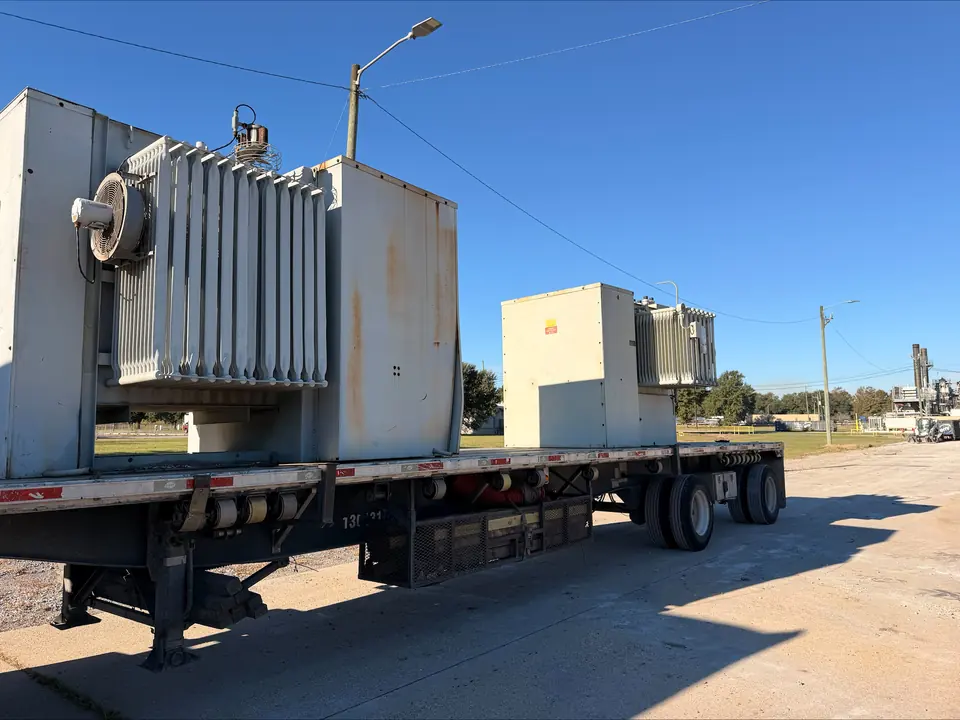
Planning transformer shipping in Texas
A transformer is not ordinary palletized freight. Its concentrated weight, elevated accessories and vulnerable bushings require a transport plan that covers the entire move, not just the highway portion. Start with the loading location, destination and the equipment’s present condition.
Anyone deciding how to move a transformer should first confirm that it is electrically isolated and ready for handling. The seller or a qualified electrical contractor must de-energize and disconnect it; a trucking appointment is not a substitute for that work. Account for cables, grounding connections, conduits and anchors before lifting.
Inspect access at both sites for narrow gates, overhead lines, soft ground, steep grades and restricted turning space. Identify who will provide lifting equipment and who will accept the delivery. If the move is part of a sale, this guide to selling a transformer explains the information to collect before requesting an offer.
- Record pickup and delivery addresses, site contacts and appointment restrictions.
- Photograph the approach, loading area, transformer base and overhead obstructions.
- Agree on loading, unloading and equipment-removal responsibilities before dispatch.
Verify weight, dimensions and center of gravity
Photograph the nameplate, then compare its information with manufacturer drawings or shipping documents. A nameplate may show total weight, oil weight or untanking weight, but these are not interchangeable. Also distinguish operating weight from shipping weight when accessories or insulating liquid were removed for delivery.
The kVA or MVA rating describes electrical capacity, not lifting weight. These units mean kilovolt-amperes and megavolt-amperes, respectively; equal-rated transformers can have substantially different weights. Measure the actual transport envelope, including radiators, bushings, cabinets, skids and anything projecting beyond the tank.
Do not assume the center of gravity is marked on the nameplate or sits at the geometric center. Look for a manufacturer’s center-of-gravity drawing, especially with offset cabinets or removable components. If the weight or balance remains uncertain, have the lifting provider resolve it before choosing equipment.
- Record total loaded weight, length, width and height in the planned shipping configuration.
- Identify separate accessories and whether their weights are included in the total.
- Note damaged bases, corroded lifting points and unsupported projections that affect handling.
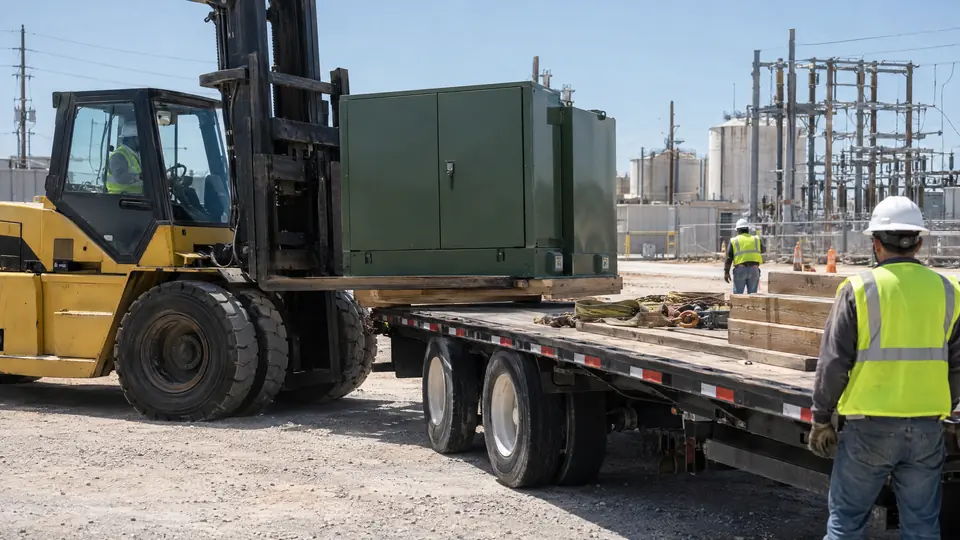
Choose forklift or crane handling from the lifting design
A forklift may suit a smaller transformer with manufacturer-approved fork pockets or a suitable supporting skid. The forklift must have adequate rated capacity at the actual load center and lift height, with forks that support the intended bearing points. A capacity number alone does not establish that a lift is safe.
Crane handling is often appropriate for heavier units or sites where forks cannot reach safely. Transformer rigging must follow the manufacturer’s lifting instructions and use designated points rated for the complete shipping assembly. Cover-lifting eyes, radiator attachments and miscellaneous brackets may not be rated to lift the entire transformer.
A qualified lifting provider should select slings, shackles and any spreader arrangement. Sling angle changes the force on each leg, and poorly routed slings can crush radiators or contact bushings. Keep people clear of suspended loads and use a controlled initial lift to verify balance before proceeding.
- Confirm which lugs are for the whole assembly and which are for removable components.
- Inspect lifting points and establish a level, adequately supported crane or forklift position.
- Stop if the load tilts unexpectedly, shifts on its support or contacts vulnerable accessories.
Select flatbed, step-deck or lowboy trailers
Trailer selection depends on loaded height, total weight, axle distribution and loading method. A flatbed can work when the transformer fits within applicable dimensions and can be lifted onto the deck. It provides an open loading surface but places the equipment higher than lower-deck alternatives.
A step-deck reduces deck height over its lower section, which can help with taller equipment. A lowboy offers a lower carrying position for tall or heavy loads, but deck dimensions, concentrated-load ratings and available axle configurations still matter. No trailer type automatically eliminates permit requirements.
The carrier needs the transformer’s footprint and weight distribution, not just a total weight estimate. A heavy tank on a small base can exceed a deck’s local capacity even when the trailer’s overall capacity appears sufficient. Have the carrier confirm placement, support requirements and axle loading before the loading crew arrives.
For transformer transport, route clearance also matters. Check site entrances, railroad crossings, bridges and overhead restrictions against the complete loaded vehicle, including the trailer and blocking.
Secure, block and protect the load
The securement plan must prevent sliding, tipping and movement during braking or turns. The carrier should select rated chains, straps, binders and attachment points that meet applicable cargo-securement rules. Weight alone does not keep a transformer in place.
Blocking should support the intended base surfaces and resist movement without damaging the tank or drain fittings. Do not route chains across bushings, cooling fins, gauges or cabinet doors. Where permitted attachment points are unclear, obtain manufacturer guidance rather than improvising around fragile components.
Tarping is a weather-protection decision, not a replacement for securement. Protect open compartments, disconnected terminals and loose accessories as the manufacturer specifies. A tarp needs suitable support and fastening so it does not rub against bushings, flap against painted surfaces or collect water.
- Close and latch cabinets; separately package loose parts with clear identification.
- Protect gauges, valves, terminals and accessories from tie-down pressure and road debris.
- Have the carrier check securement after initial travel and at required intervals.
- Photograph the loaded equipment and visible condition before the truck leaves.
Handle Texas oversize and overweight permits
Transformer shipping in Texas may require permits when the loaded vehicle exceeds applicable legal size or weight limits. The Texas Department of Motor Vehicles administers oversize and overweight permitting for covered movements. Check current requirements against the actual vehicle configuration, axle weights and route.
If an oversize permit in Texas is needed, the carrier or its permit service should establish the permit type, approved route and operating conditions before departure. Requirements can include movement windows, signs, flags, lighting or escorts. Conditions depend on the load and permit; they should not be guessed from a previous shipment.
An overweight permit does not mean every bridge or road can carry the load. Route approval, axle spacing and load distribution remain important, and access roads outside the approved route need attention. Local road authorities may have separate restrictions or permissions.
Confirm who obtains permits and verifies clearances in the freight agreement. Changes to the trailer, loaded dimensions or route can require a revised plan. Keep permit documentation available to the driver and do not schedule loading around an assumed approval.
Control oil leaks and document equipment condition
Inspect oil-filled equipment for active leaks, damaged valves, loose plugs and cracked bushings before loading. Verify liquid level and transport orientation against manufacturer instructions. Do not drain insulating liquid simply to reduce shipping weight without a plan for safe handling, storage and the transformer’s required shipping condition.
The shipper and carrier should establish spill-prevention measures appropriate to the condition and contents. Depending on the shipment, that may include protecting drain valves, suitable containment and readily available spill-response supplies. Active leakage needs to be addressed before transport rather than hidden under a tarp.
PCB means polychlorinated biphenyls, substances historically used in some insulating fluids. If PCB status is unknown, obtain relevant records or testing guidance from a qualified environmental professional; age or appearance alone does not establish status. Fluid classification and equipment condition can affect transport and handling requirements.
Flood exposure can introduce additional handling concerns. Document water intrusion, damaged seals and contamination rather than describing the unit only as used; see the guide to storm- and flood-damaged transformers for sale-related information.
Arrange freight when selling your transformer
Texas Transformer Buyers buys new surplus, used, retired and failed transformers statewide and coordinates trucking and pickup. Based at 6402 McGrew St, Houston, TX 77087, we buy single units or whole lots, any brand, from 10 kVA pole-mounts to large MVA substation and power transformers.
Send a nameplate photo, overall photos, quantity, location and condition. Include known weight, dimensions, leaks and access restrictions so we can review the equipment and respond with an offer. Our pages for substation transformers and power transformers cover those equipment categories.
Price, payment terms and pickup details are agreed in writing before anything is loaded. The seller or the seller’s qualified electrical contractor must de-energize and disconnect the equipment; we coordinate freight and load-out with the seller.
To discuss transformer shipping in Texas as part of a sale, call or text (951) 403-5738, email Industrial832@gmail.com, or submit your transformer details for an offer. If you are comparing selling options first, read who buys used transformers in Texas.
Frequently asked questions
Can a forklift move a padmount transformer?
Sometimes, if the transformer has approved fork pockets or suitable supporting provisions and the forklift is rated for the actual load center and lift height. Check the manufacturer’s instructions, fork engagement and ground conditions rather than relying on electrical capacity or appearance.
Does the nameplate always show the shipping weight?
No. A listed weight may describe the complete operating unit, oil only or another configuration. Confirm its meaning with drawings or shipping records, then account for any components added or removed before choosing lifting equipment and a trailer.
Does every transformer shipment need a Texas permit?
No. Permit requirements depend on the loaded vehicle’s dimensions, weight, axle loading and applicable limits. The carrier should check current Texas Department of Motor Vehicles requirements and any route-specific or local restrictions before dispatch.
Should an oil-filled transformer be drained before shipping?
Not automatically. Follow the manufacturer’s transport instructions and establish how any removed fluid will be handled. Draining changes weight and may change equipment protection requirements; it also creates a separate liquid-handling task.
Who supplies the crane and unloads the transformer?
These responsibilities should be assigned before booking the move. The freight agreement should identify the loading provider, unloading provider, necessary lifting equipment and site contacts. Do not assume the truck driver will supply rigging equipment or operate a crane.
Can a failed transformer still be shipped for sale?
Yes, but failure condition matters to the handling plan. Report leaks, fire damage, broken bushings and unstable components before freight is arranged. Electrical failure alone does not establish whether the equipment is safe to lift or transport.