Identify what you have and who controls the sale
Electrical contractors may sell project surplus, while plants replace aging equipment or clear storage yards. Utilities and co-ops retire distribution units; developers remove equipment during site redevelopment. Oilfield operators and mining operators, including cryptocurrency miners, may have transformers left after shutdowns or capacity changes.
Before requesting offers, confirm who owns the equipment and who can authorize its sale. A transformer on your property may belong to a utility, lessor, or another contractor. Check ownership records, project agreements, and asset tags rather than assuming possession establishes ownership.
Create an inventory that separates new surplus, working used equipment, retired units with unknown condition, and failed transformers. If you plan to sell an electrical transformer with related switchgear or loose accessories, identify those items separately so buyers know exactly what is included.
- Assign each unit a reference number that appears in your photos and inventory.
- Record the quantity, equipment type, owner, and reason for removal.
- Identify the person authorized to approve the price and release the equipment.
Gather nameplate details and useful photos
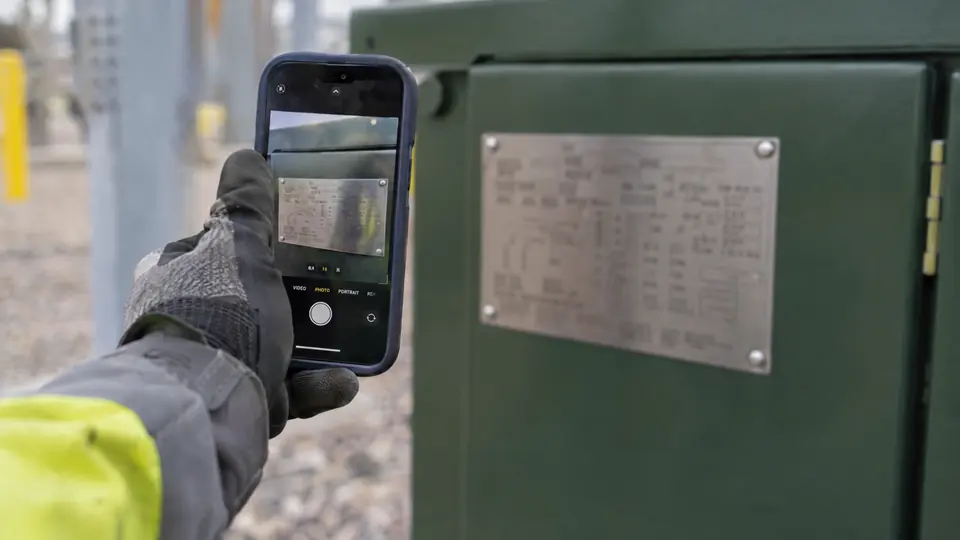
Take a readable, straight-on photo of each nameplate. Transformer ratings commonly use kVA, or kilovolt-amperes, and MVA, or megavolt-amperes, to describe apparent power capacity. Record primary and secondary voltage, meaning the input and output voltage ratings, along with phase and manufacturer.
Include impedance if it is listed. This percentage describes the transformer's opposition to current and matters when evaluating system compatibility. A guide to reading transformer nameplates can help you identify the fields without guessing.
Overall photos should show every side, connections, bushings, doors, cooling equipment, and visible damage. For enclosed equipment, photograph accessible interiors only when a qualified person has established safe access. Keep original photo files so small lettering remains readable.
- Provide quantity, city, site address, and whether the units are indoors or outdoors.
- Include serial numbers, approximate dimensions, listed weight, and available drawings.
- Photograph leaks, corrosion, missing parts, damaged bushings, and included accessories.
- State whether the unit is new, used, retired, failed, or of unknown operating condition.
Confirm electrical status and check oil records
A shutdown facility does not prove that its transformer is electrically safe. Have the seller's qualified electrical contractor establish the equipment's status, address possible backfeed and stored energy, and follow the site's isolation procedures. Record whether the transformer remains connected, is disconnected in place, or has already been moved.
For oil-filled equipment, photograph any PCB label and gather existing oil-test records. PCB means polychlorinated biphenyls, chemicals historically used in some electrical insulating fluids. A missing label does not establish PCB status, and equipment age alone is not a substitute for documentation.
Share the test date, laboratory report, and unit identification when available. Existing dissolved gas analysis, or DGA, reports can help buyers understand operating history, but they do not replace PCB testing. If records are missing, discuss documentation needs before arranging transport; do not sample oil yourself unless qualified to do so.
- State electrical status plainly rather than describing the unit only as offline.
- Identify leaks, damaged tanks, and any known oil loss.
- Match test reports to the correct serial number or asset identification.
How to sell a transformer through the right buyer
When deciding where to sell transformers, compare buyers by the equipment they accept and the work required from you. An equipment buyer may evaluate a unit for reuse, repair, or parts. A scrap buyer generally evaluates recoverable material, while an auction or broker may require a different sales process.
Send each prospective buyer the same inventory, photos, condition description, and location. Ask whether the offer covers the complete unit, its oil, radiators, enclosure, and accessories. Missing scope makes two offers difficult to compare, even when one headline price looks better.
Learn about the types of buyers for used transformers before choosing a route. Also compare resale value with transformer scrap value rather than assuming a retired transformer belongs in the scrap stream. Working condition, specifications, completeness, and transport requirements can all influence the appropriate route.
- Ask who arranges trucking and who pays agreed freight and loading costs.
- Confirm whether inspection or testing is required before the offer becomes final.
- Identify any excluded components, required preparation, or conditions affecting acceptance.
Evaluate the offer using condition and logistics
An offer reflects more than transformer size. Voltage configuration, condition, available records, missing components, and the difficulty of removal can affect a buyer's evaluation. New equipment in its crate should be documented differently from a failed unit with damaged bushings or an unknown service history.
If you want to sell a used transformer in Texas, explain why it was removed and whether it operated when last energized. Share existing maintenance and test records without claiming that old results prove its current condition. The factors behind used-transformer value provide a useful framework for organizing that information.
Compare the complete transaction, not just the offered amount. A sale requiring you to arrange a crane, transport, or additional preparation may have different net proceeds from one with those costs allocated to the buyer. Clarify responsibilities before accepting.
Put price, payment, and pickup terms in writing
The written agreement should identify the buyer, seller, equipment, included accessories, and agreed price. Use serial numbers or your inventory references to avoid confusion when several similar units share a yard. If the sale depends on inspection, document that condition and how discrepancies will be handled.
Specify payment method and the event that triggers payment. Also identify who can authorize release, when ownership transfers, and who carries responsibility during loading and transport. Resolve those details before equipment is loaded rather than leaving them to the truck driver.
Pickup terms should name the location, site contact, access restrictions, and each party's loading responsibilities. Include any agreed storage arrangements or removal deadline. Keep changes in writing so the purchase agreement, site instructions, and freight booking remain consistent.
- List each unit and accessory included in the sale.
- Document price, payment terms, freight costs, and loading costs.
- Confirm inspection conditions, release authorization, and the agreed pickup window.
Plan the forklift, crane, rigging, and trailer
Provide verified weight and dimensions before freight is booked. A forklift's suitability depends on its rated capacity at the actual load center, the equipment's lifting provisions, and site conditions. Large or awkward units may require a crane and a lift plan prepared by qualified personnel.
Use designated lifting points and appropriate rated rigging; do not assume bushings, radiators, or cabinet edges can support a lift. Tell the transporter about gravel, slopes, overhead lines, narrow gates, dock height, and limited turning space. These details can change the equipment needed for safe access.
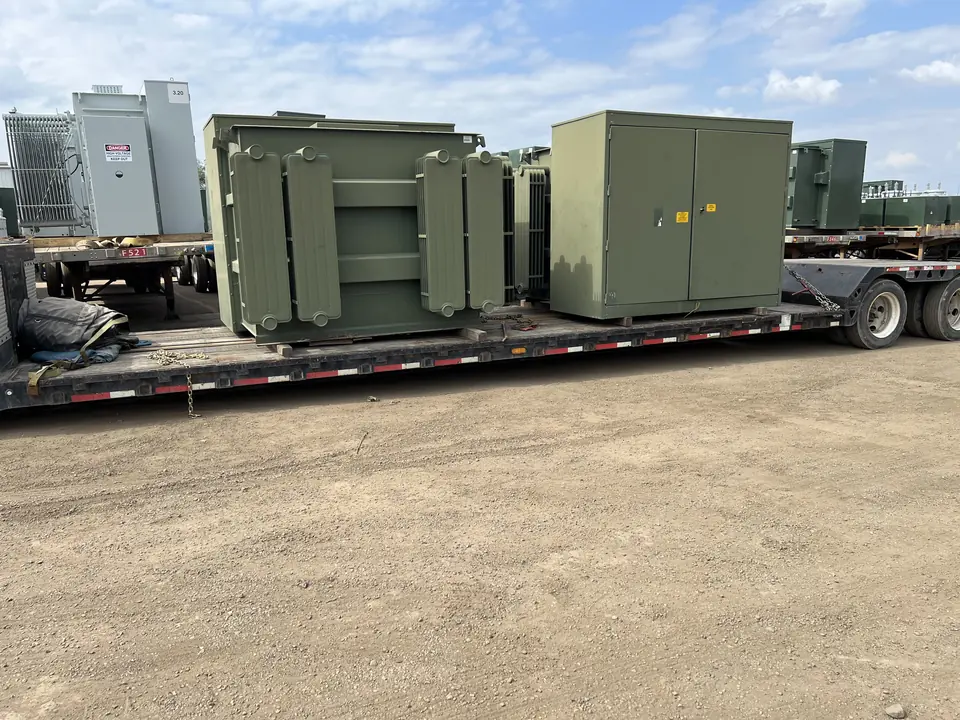
Trailer selection depends on weight, height, dimensions, and loading method. A flatbed, step-deck, or other suitable trailer may be needed, with permits evaluated by the transporter where applicable. Coordinate securement and protection for vulnerable parts before the truck arrives.
- Confirm who supplies and operates the forklift or crane.
- Clear the loading area and establish a controlled work zone.
- Identify removable accessories and document how they will travel with the unit.
Prepare the bill of sale and shipping records
A bill of sale documents the transaction between seller and buyer. Include their names, the equipment description, serial numbers when available, price, sale date, and agreed conditions. Retain the written agreement, payment records, and supporting inventory with your asset-disposal records.
A bill of lading is the shipping record used for the freight movement; it does not replace the sales agreement. Check pickup and delivery details, unit count, equipment description, and the documented condition at loading. Photograph each unit before it leaves and record any accessories shipped separately.
Have an authorized site representative verify the load against the agreed inventory. Record discrepancies before departure and keep copies of signed shipping documents. Good records make it easier to resolve a missing accessory, incorrect unit count, or damage question later.
Request an offer from Texas Transformer Buyers
Texas Transformer Buyers buys single units and whole lots statewide, any brand, new in crate or used, working or failed. Equipment ranges from 10 kVA pole-mounts to large MVA substation and power transformers. Our office and yard sit at 6402 McGrew St, Houston, TX 77087.
Send a nameplate photo, overall photos, quantity, location, and condition through the transformer offer form, by text to (951) 403-5738, or by email to Industrial832@gmail.com. You can also call that number. Once we have reviewed the details, we respond with an offer.
For equipment-specific information, see padmount transformer sales or selling substation transformers. Price, payment terms, and pickup details are agreed in writing before anything is loaded. The seller or the seller's qualified electrical contractor must de-energize and disconnect equipment; we coordinate trucking, pickup, and load-out with the seller.
Frequently asked questions
Can I sell a failed transformer?
Yes. Describe the failure, known damage, leaks, and missing parts accurately. Photos and existing test records help a buyer evaluate the unit without treating it as working equipment.
How do I sell a transformer without a readable nameplate?
Provide overall photos, asset records, drawings, and any legible manufacturer or serial-number markings. Explain that the nameplate is missing or unreadable rather than estimating ratings as confirmed facts.
Does a transformer need to be disconnected before I request offers?
You can request offers while planning removal. State that it remains connected so buyers can account for the schedule. Qualified electrical personnel must make it safe before removal and loading.
What if I do not have a PCB test report?
Share any labels and available oil records, and tell the buyer the report is unavailable. Confirm what documentation is needed before pickup; do not represent unknown PCB status as verified.
Can several transformers be sold as one lot?
Yes. Prepare a unit-by-unit inventory with photos, ratings, condition, and location. Specify whether the offer must cover the entire lot or whether individual units may be purchased separately.