Sell a 20 MVA transformer from a Texas facility
We buy single transformers or whole lots, any brand, whether new in crate, operating before removal or failed. Our yard and office are at 6402 McGrew St, Houston, TX 77087, and we coordinate trucking and pickup across Texas.
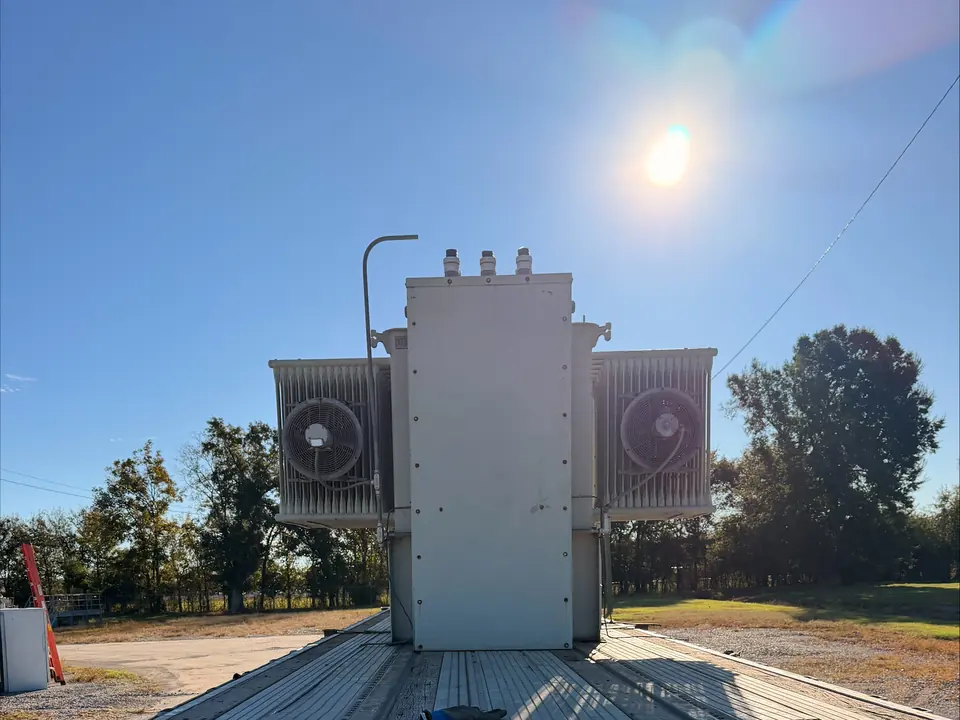
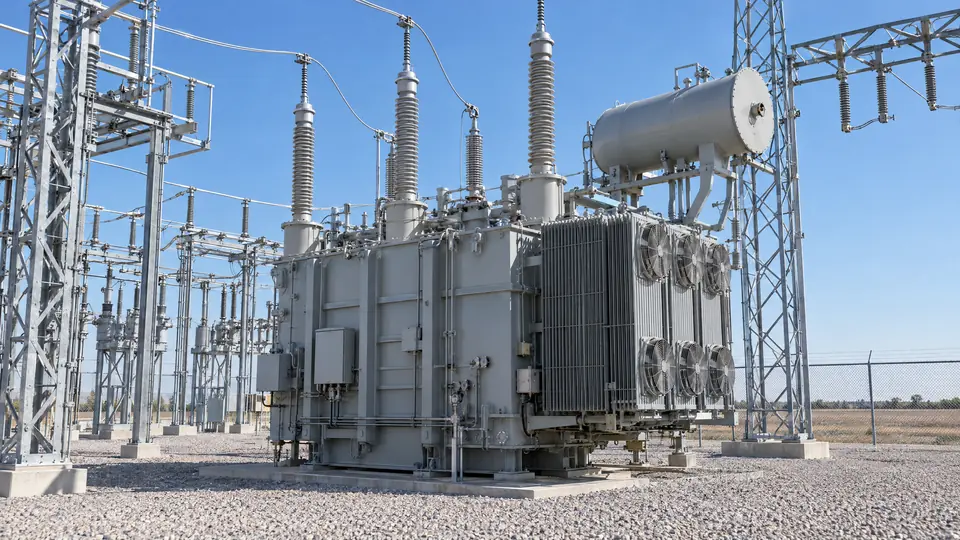
A 20 MVA unit is typically a three-phase power transformer with a large tank, external cooling equipment, high-voltage bushings and substantial connections. MVA means megavolt-amperes, a measure of apparent power capacity; 20 MVA equals 20,000 kVA, or kilovolt-amperes. Configuration matters as much as the rating when identifying a potential application.
These units serve utility substations, refineries and renewable collector substations, where they connect plant or collection-system voltage to a higher-voltage network. They may be stationary power transformers, integrated substation transformers, or equipment mounted as part of a mobile substation. Photograph the complete assembly so we can see what is included.
| Voltage | Full-load amps | Typical role |
|---|---|---|
| 4,160 V | 2,776 A | Medium-voltage secondary |
| 12,470 V | 926 A | Distribution primary / secondary |
| 13,800 V | 837 A | Distribution primary / secondary |
| 24,940 V | 463 A | Distribution primary / secondary |
| 34,500 V | 335 A | Distribution primary / secondary |
| 69,000 V | 167 A | Transmission primary |
| 138,000 V | 84 A | Transmission primary |
Check any rating with the kVA to amps calculator.
Voltage combinations and 20 MVA transformer specs
Common voltage combinations encountered at this size include 69,000 to 13,800 volts and 138,000 to 13,800 volts. Other configurations connect 69,000 or 138,000 volts to 12,470, 24,940 or 34,500 volts. Renewable collector applications may involve a 34,500-volt winding, but the actual nameplate determines the unit's configuration.
Primary and secondary voltage describe the rated voltages on the input and output sides for the intended application. Send every listed winding voltage, including any tertiary winding, which is an additional winding serving a separate circuit. Include the winding connection diagram and tap range rather than assuming two transformers with the same MVA rating are interchangeable.
Check whether 20 MVA is the base rating or a forced-cooling rating. ONAN means oil natural, air natural cooling; ONAF means oil natural, air forced cooling using fans. A plate may list multiple capacities, so photograph all ratings and identify missing fans, radiators or controls.
Full-load amps and what they tell a buyer
For a three-phase transformer, full-load current is kVA multiplied by 1,000, divided by 1.732 times the winding's line-to-line voltage. At 20,000 kVA, current is approximately 926 amps at 12,470 volts, 837 amps at 13,800 volts and 463 amps at 24,940 volts.
At higher voltages, the corresponding values are approximately 335 amps at 34,500 volts, 167 amps at 69,000 volts and 84 amps at 138,000 volts. The table below makes these comparisons easier; use the transformer kVA-to-amps calculator when checking another winding voltage or rating.
Buyers care because winding current affects compatibility with bus connections, cables, breakers and other substation equipment. These calculations describe rated current, not short-circuit duty or suitability for an existing installation. Voltage, cooling rating and the rest of the electrical specifications still need to match.
What affects value and demand at 20 MVA
Demand for a used 20 MVA transformer depends on matching a specific electrical duty, not capacity alone. Utility replacement work, refinery projects and renewable substation needs can involve this size, but voltage combinations, winding connections and equipment condition determine whether a unit fits a prospective application.
A 20 MVA transformer buyer also considers impedance, the percentage measure of internal opposition to current that influences voltage regulation and fault current. Tap-changing equipment, cooling stages, available accessories and documented operating history help distinguish otherwise similar units.
Recent test reports can support the condition description. DGA, or dissolved gas analysis, evaluates gases in insulating oil for signs of internal problems; winding resistance, insulation and ratio-test records add useful context. If the transformer failed, describe the event and known damage instead of listing it simply as used.
Completeness and removal costs also affect an offer. Missing bushings, damaged radiators, uncertain storage conditions or difficult site access can change the assessment. We evaluate working and failed units, so send the available information even when records are incomplete.
Nameplate details and photos to send
When preparing to sell a 20 MVA transformer, start with a sharp, straight-on photo of the entire nameplate. Our guide to reading a transformer nameplate can help you locate ratings that may be spread across several plates.
Include the following details with your photos. Clear documentation lets us evaluate the equipment without relying on assumptions about its size or previous service.
- Manufacturer, serial number, year shown on the plate, quantity and exact Texas location.
- All MVA ratings, primary and secondary voltages, frequency, phase count, impedance and winding connections.
- Tap positions and range, cooling designations, and details of installed tap-changing equipment.
- Overall views from several sides, plus bushings, radiators, fans, cabinets and any visible damage or leaks.
- Working, retired, surplus or failed condition; storage history; available test reports; and oil documentation, including any PCB information. PCB means polychlorinated biphenyls, substances historically used in some electrical insulating fluids.
Weight, rigging and trailer planning
A 20 MVA transformer requires load-out planning around its actual configuration. The nameplate lists exact weights; photograph those entries and distinguish total assembled weight from any separately listed transport, tank or accessory weights. Shipping drawings help clarify what must travel separately.
Trailer selection depends on shipping weight, height, width, route restrictions and how the equipment can be loaded. Radiators, bushings or other components may require separate handling, depending on the design and transport plan. Do not estimate crane capacity or trailer suitability from MVA alone.
Send photos of lifting points, the foundation, access roads, gates and overhead obstructions. Disconnection and de-energizing stay with the seller or the seller's qualified electrical contractor. We coordinate freight and load-out with the seller, with responsibilities and pickup details agreed before loading.
Get an offer for your 20 MVA transformer in Texas
To sell a 20 MVA transformer in Texas, call or text (951) 403-5738, email Industrial832@gmail.com, or submit your transformer for an offer. Send the photos and specifications along with quantity, location and condition.
Tell us whether the unit is still installed, already disconnected or stored for shipment, and whether accessories are included. We evaluate the details and respond with an offer. Nothing is loaded until the price, payment terms and pickup plan are confirmed in writing.
Frequently asked questions
Can I sell a 20 MVA transformer with a failed winding?
Yes. We buy failed transformers as well as working equipment. Include the failure description, inspection findings, photos and any available test reports so we can assess the unit's condition.
What if the plate shows 20 MVA only with fans running?
Send every cooling-stage rating. A forced-air rating is different from the natural-cooling capacity, and buyers need both to evaluate the transformer for a proposed load.
Can you evaluate a complete 20 MVA mobile substation?
Yes. Photograph the transformer, trailer and associated equipment, and list what is included. Provide transformer ratings separately from information about switchgear, controls and the transport assembly.
Does a 69 kV to 13.8 kV unit have the same amps on both sides?
No. At 20 MVA, full-load current is approximately 167 amps on the 69,000-volt side and 837 amps on the 13,800-volt side. Each winding's current depends on its voltage.
Should I remove radiators before requesting an offer?
Send photos of the assembled unit first and identify any parts already removed. Component removal should follow the equipment's requirements and the agreed transport plan, rather than an assumption about trailer clearance.