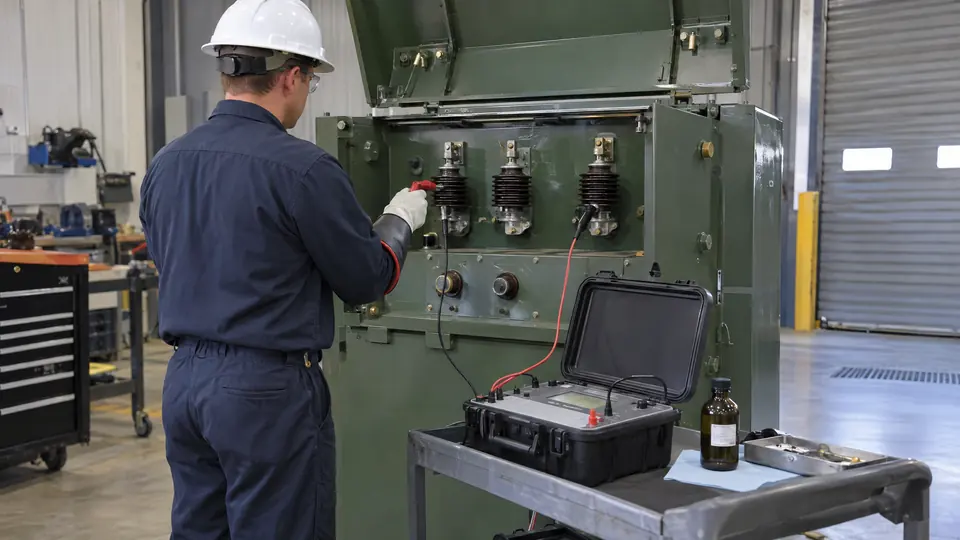
What PCBs are and why older transformers need checking
Polychlorinated biphenyls, or PCBs, are industrial chemicals formerly used in some electrical insulating fluids. They resist heat and chemical breakdown, but persist in the environment and pose health risks. Some older transformers used PCB-containing fluids; others acquired contamination through servicing, shared equipment or replacement oil.
Production of PCBs was banned in the U.S. in 1979. That date is useful background, not proof of an individual transformer's status. An older mineral-oil transformer does not automatically contain high PCB concentrations, and a newer manufacturing date does not resolve every question about its service history.
Start by identifying whether the transformer contains liquid insulation. A dry-type transformer does not have an insulating-oil reservoir to sample, although associated equipment needs its own assessment. The guide to dry-type and oil-filled transformers explains the basic equipment differences.
- Look for the manufacturer, serial number, manufacturing date and insulating-fluid description.
- Photograph every fluid-related label, including damaged, painted-over or partly readable markings.
- Check maintenance records for oil replacement, retrofills, repairs and previous PCB analyses.
PCB transformer oil testing and EPA classifications
Federal PCB requirements are in 40 CFR Part 761. For transformer fluid, the main concentration thresholds below are expressed in parts per million, or ppm. These categories matter because PCB concentration can affect use, servicing, marking, storage, transportation and disposal requirements.
Classification is not simply a label chosen by an owner. EPA rules also include assumptions for certain equipment when concentration has not been established. Missing records should prompt consultation of the applicable rules, not an unsupported declaration that the transformer is non-PCB.
- Under 50 ppm: classified as non-PCB for these concentration-based categories.
- 50 to less than 500 ppm: classified as PCB-contaminated electrical equipment, commonly described as 50–499 ppm.
- 500 ppm or greater: classified as a PCB Transformer under the federal rules.
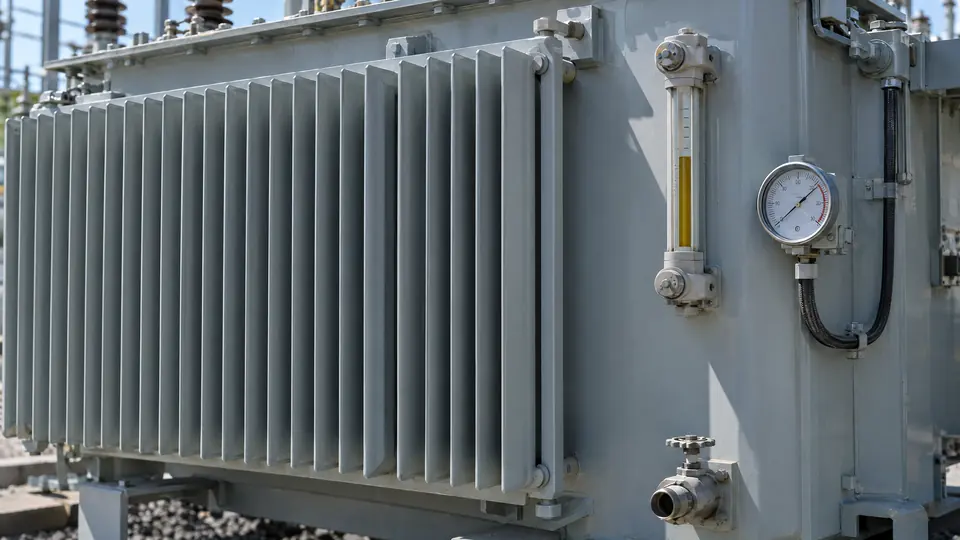
Reading non-PCB labels and manufacturer statements
A non PCB transformer label is useful evidence, but read exactly what it says. A factory marking may describe the original fluid, while a later service label may refer to a replacement fill or a particular test. Photograph the label alongside the nameplate so both can be tied to the same unit.
Manufacturer statements are strongest when they identify the specific transformer or a clearly applicable production record. A general statement about a product line is less informative than a serial-number-specific document. Keep the statement with maintenance records rather than treating it as a substitute for all later service history.
Retrofilling means replacing the original insulating liquid with another fluid. It does not automatically establish non-PCB status: residual PCBs can migrate from internal materials into the new oil. Reclassification has specific regulatory conditions, so a fresh-oil receipt or an immediate post-fill sample alone may not settle the issue.
- Match the serial number on statements and reports to the physical nameplate.
- Distinguish a factory marking from a maintenance sticker or handwritten note.
- Flag conflicting labels, missing dates and records that describe only the replacement oil.
Getting a representative sample and usable lab report
For PCB transformer oil testing, use a laboratory that can analyze PCBs in the actual insulating-fluid matrix and provide clear reporting limits. Ask the lab for its sampling instructions, containers and shipping requirements before collecting anything. Field screening can help identify concerns, but it is not interchangeable with a documented laboratory analysis.
Have a qualified person assess access and sampling safety. Opening a valve or port can expose workers to electrical hazards, hot oil, pressure and spills. Do not open a tank or operate an unfamiliar valve merely to obtain a sale photo or sample.
The report needs to connect the sample to the equipment. A result marked not detected means the laboratory did not detect PCBs above its stated reporting limit; it does not mean absolute zero. A reporting limit above a relevant classification threshold cannot establish that the fluid falls below that threshold.
- Record the transformer serial number, sample location, collection date and fluid type.
- Follow the laboratory's instructions for representative sampling, clean equipment and sample handling.
- Keep the chain-of-custody record, which tracks sample collection and transfer.
- Request the analytical method, concentration units and reporting limit with the result.
Condition testing answers a different set of questions
A transformer oil test for electrical condition does not establish PCB concentration unless PCB analysis is specifically included. Likewise, a low PCB result does not show that the insulation is dry or that the transformer is electrically sound. Specify which questions the testing needs to answer before ordering a panel.
Dielectric breakdown testing measures the fluid's resistance to electrical breakdown under a defined laboratory method. Moisture testing measures water in the fluid, often reported in ppm. Interpretation depends on the fluid type, temperature, equipment and test method; one universal pass-or-fail number is not appropriate for every transformer.
Dissolved gas analysis, or DGA, measures gases dissolved in insulating oil. Gas patterns and trends can indicate overheating, discharge activity or other internal problems, but require context and experienced interpretation. Prior reports, operating load and the reason the unit was removed help make a current result meaningful.
- PCB analysis: chemical classification of the sampled fluid.
- Dielectric breakdown: electrical insulating performance under the specified test conditions.
- Moisture: water content relevant to the insulation system.
- DGA: diagnostic evidence of possible internal thermal or electrical activity.
Handling unknown results, leaks and disposal questions
Keep unknown status clearly identified until records or appropriate testing resolve it. Do not drain, mix or dilute oil to change a classification. Avoid combining fluids from different units: doing so can spread contamination and make the original equipment records less useful.
If a transformer leaks, restrict access and have qualified personnel evaluate containment and any reporting obligations. PCB transformer disposal is a regulated process, not ordinary scrap handling. Requirements depend on the equipment, concentration, waste and circumstances, and state or local requirements may also apply.
Use a qualified environmental professional or disposal provider when regulated PCB equipment or contaminated materials are involved. A sale discussion does not replace the owner's compliance obligations. Before arranging a move, read about the practical issues in shipping transformers in Texas, including access, load-out and freight coordination.
- Keep each unit's records and samples separate.
- Document visible leaks without touching or opening the equipment.
- Resolve handling and destination requirements before equipment or oil leaves the site.
Build a clear record for each transformer
Create one equipment file per serial number, even when selling a whole lot. Include the nameplate, overall photos, labels, PCB documentation, condition reports and maintenance history. Identify reports for oil that was subsequently replaced rather than presenting them as current-fluid results.
List the rating in kVA or MVA, units of transformer apparent-power capacity, along with primary and secondary voltage. Primary voltage describes the input side; secondary voltage describes the output side. Note whether the unit is working, retired, failed or untested, and explain any known fault.
Equipment layout also affects evaluation and load-out planning. Include photos of bushings, cable compartments, radiators and the base, taken only from safe, accessible positions. The comparison of padmount and substation transformers can help describe the configuration accurately.
- Nameplate and overall photos, quantity, location and condition.
- Fluid labels, manufacturer statements and available laboratory reports.
- Known leaks, damage, oil changes and removal reason.
- Access restrictions, approximate dimensions and available lifting information.
Send your transformer details for a Texas offer
Texas Transformer Buyers buys new surplus, used, retired and failed transformers statewide, including single units and whole lots of any brand. Equipment ranges from 10 kVA pole-mounts to large MVA substation and power transformers. Send the records you have for oil-filled transformer evaluation, and clearly identify any unknown PCB status.
Call or text (951) 403-5738, email Industrial832@gmail.com, or submit your transformer details for an offer. Provide nameplate and overall photos, quantity, location and condition, plus available oil reports. We evaluate the details and respond with an offer.
Our office and yard sit at 6402 McGrew St, Houston, TX 77087. You get the price, payment terms and pickup details in writing before a truck is loaded. The seller or the seller's qualified electrical contractor must de-energize and disconnect the equipment; we coordinate trucking, pickup and load-out with the seller.
Frequently asked questions
Does a non-PCB label mean the oil contains no PCBs?
No. Non-PCB classification generally means a concentration below 50 ppm, not necessarily zero. Read the label's basis and check whether later oil changes or service history affect its relevance.
Does every transformer made before 1979 contain PCBs?
No. Age is a reason to investigate, not a concentration result. Fluid type, manufacturer documentation, maintenance history and appropriate testing help establish status.
Can a dielectric test replace a PCB analysis?
No. Dielectric testing evaluates insulating performance under specified conditions. PCB analysis measures a chemical concentration. Ask the laboratory to include both if both questions need answers.
Can I use one oil sample to classify an entire lot?
Do not assume one unit represents the others. Transformers can have different fluids and service histories. Keep results tied to individual equipment and obtain advice on an appropriate sampling plan.
Should I drain the transformer before requesting an offer?
Do not drain it just to prepare for a sale. First document its condition and fluid status, then resolve handling requirements and the proposed pickup arrangement. Draining introduces spill, waste and recordkeeping issues.