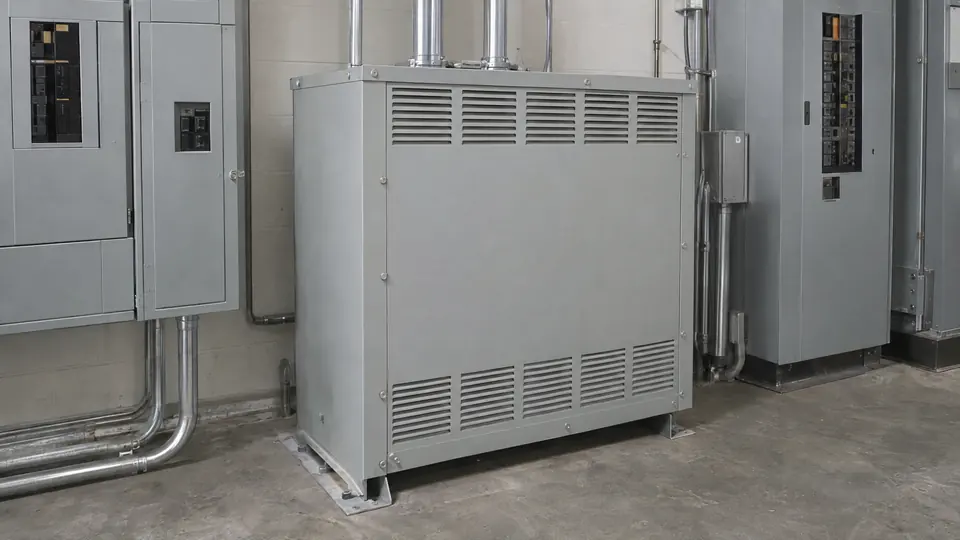
Dry Type vs Oil Filled Transformer Basics
Both designs use a magnetic core and windings to change voltage. The difference is how they insulate energized components and remove heat. A dry-type transformer uses solid insulation and air circulation; an oil-filled transformer places its core and coils in insulating liquid inside a tank.
Dry-type designs include ventilated windings and cast-coil construction, where resin encapsulates the windings. In a dry type transformer vs liquid filled comparison, remember that liquid-filled equipment may contain mineral oil or another insulating fluid, such as an ester. Fluid type affects fire characteristics, maintenance and handling.
Liquid transfers heat from the windings to the tank and radiators. Air removes heat from dry-type windings through natural circulation or fans. Neither design can deliver its rated output reliably if ventilation, ambient temperature or cooling equipment falls outside its specified operating conditions.
- Read the nameplate for capacity, voltage, cooling class and temperature-rise rating.
- Check the actual insulation or fluid type rather than assuming it from the enclosure.
- Identify fans, radiators and ventilation openings before planning installation or removal.
Indoor and Outdoor Installation Requirements
Dry-type transformers are common inside commercial buildings and industrial facilities because they do not contain a tank of insulating liquid. They still generate heat and require clearances, ventilation and appropriate protection from dust, moisture and physical contact.
Oil-filled units are common outdoors, including pad-mounted distribution equipment and substations. Indoor installation can also be possible, but fluid characteristics, equipment ratings and applicable electrical, building and fire requirements determine whether a vault, fire separation or other measures are needed.
A dry-type unit is not automatically suitable outdoors, and an oil-filled unit is not automatically prohibited indoors. Verify the enclosure rating and installation instructions with the project engineer and authority having jurisdiction. Less-flammable fluids may change installation requirements, but applicable codes still govern the installation.
- Confirm ventilation capacity and room temperature under the expected load.
- Check fire separation, liquid containment and access requirements for the proposed location.
- Check outdoor exposure, flood elevation, corrosion conditions and service clearances.
Efficiency, Losses and Sound
Core losses occur whenever a transformer is energized, even with little load. Winding losses increase with load current. Compare tested no-load and load losses at compatible ratings and reference conditions rather than deciding that one insulation system is always more efficient.
An oversized transformer serving a light load can spend much of its life carrying avoidable core losses. A heavily loaded unit faces greater winding losses and heat. Available efficiency data, expected load profile and fan power provide a more useful operating-cost comparison than construction type alone.
Both designs produce audible core hum. Liquid and a tank can affect sound transmission, while dry-type enclosures and cooling fans introduce different noise paths. Compare manufacturer sound data, mounting conditions and distance to occupied spaces; either design can need acoustic treatment in a sensitive location.
- Compare losses at the load levels the facility actually expects to use.
- Include cooling-fan energy where fans are necessary for the selected rating.
- Check sound data before placing equipment beside offices or occupied rooms.
Lifespan Depends on Operating Conditions
There is no dependable lifespan winner based solely on dry-type or oil-filled construction. Insulation aging depends heavily on temperature, loading, moisture, contamination and electrical stress. Maintenance history and evidence of overheating tell a buyer more than age alone.
Liquid-filled equipment can benefit from fluid sampling and, where justified, specialist fluid treatment. Dry-type equipment avoids liquid leaks, but contaminated cooling passages, wet insulation and damaged cast resin can still create serious problems. Repairs depend on construction and damage severity.
For a cast coil vs oil transformer decision, consider the environment as well as repair options. Resin encapsulation can protect windings from some contamination, but it does not make equipment floodproof. See the guide to storm- and flood-damaged transformers when water exposure is part of the equipment history.
- Document overloads, overheating alarms, flood exposure and protective trips.
- Inspect for cracked resin, insulation discoloration, corrosion and leaking seals.
- Keep service records with the unit when it is retired or offered for sale.
Maintenance and Testing Priorities
Dry-type maintenance centers on cleanliness, airflow, connections and insulation condition. Inspect vents, filters if fitted, fan operation and signs of overheating. Cleaning methods must follow manufacturer instructions; aggressive washing or unsuitable solvents can damage insulation.
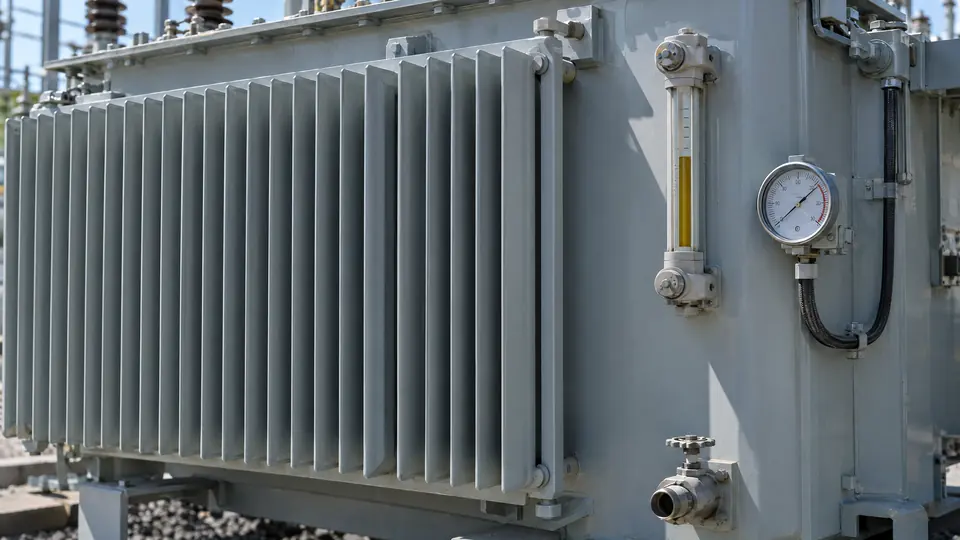
Oil-filled maintenance includes checking liquid level, leaks, bushings, cooling equipment and applicable gauges or protective devices. Fluid testing may assess moisture, dielectric strength and other condition indicators. DGA, or dissolved gas analysis, measures gases in the fluid that can help identify developing electrical or thermal faults.
Electrical tests may include turns ratio, winding resistance and insulation resistance, selected and interpreted by qualified personnel. PCB means polychlorinated biphenyls, chemicals historically used in some insulating fluids. For older liquid-filled equipment, retain fluid identification and any PCB test records rather than inferring status from appearance.
- Collect dated inspection reports and electrical test results.
- For liquid-filled units, keep fluid sample reports tied to the correct serial number.
- Have qualified personnel determine safe isolation and appropriate testing procedures.
Typical Ratings and Applications
Transformer capacity is expressed in kVA, or kilovolt-amperes; larger equipment is often rated in MVA, or megavolt-amperes. One MVA equals 1,000 kVA. These are apparent-power ratings, not a direct statement of the usable real power for every connected load.
Dry-type units commonly serve building distribution and industrial loads, from small ratings through several thousand kVA. Cast-coil equipment can also serve medium-voltage applications at multi-MVA ratings. Oil-filled equipment spans small pole-mounted distribution units through large substation and power transformers.
The ranges overlap substantially. Match primary and secondary voltage—the incoming and outgoing voltages—along with phase, frequency and impedance. Impedance describes how strongly the transformer limits fault current and affects voltage regulation. On oil-filled nameplates, ONAN means oil natural, air natural cooling; ONAF adds forced-air cooling, commonly through fans.
- Distinguish the base rating from any higher fan-assisted rating.
- Record voltage taps, winding connections and enclosure or terminal arrangement.
- Compare dimensions and service access alongside the electrical rating.
Resale Value Follows Usability and Condition
A dry type vs oil filled transformer comparison does not establish resale value by itself. Capacity, voltage combination, condition, completeness and demand for that configuration matter. A usable unit with clear documentation presents a different opportunity from equipment with missing components or an unexplained failure.
Dry-type buyers need to assess windings, insulation, enclosure condition and moisture exposure. Oil-filled buyers also need tank condition, fluid information and leak history. Photographs should show the nameplate, terminals, all sides and any damage; recent test records can reduce uncertainty.
Specialized voltages, unusual dimensions or missing accessories can narrow the potential market. The explanation of demand for used transformers in Texas gives additional context. Avoid treating equipment weight or its original purchase cost as a complete resale valuation.
- List missing bushings, panels, fans, gauges and other accessories.
- Describe failures factually, including the last known operating condition.
- Keep each unit's photos and records separate when selling a mixed lot.
Handling and Removal Differences
Dry-type equipment needs protection from rain and transit moisture, even when it appears mechanically robust. Its enclosure may not be suitable for lifting; use designated lifting points and the manufacturer's handling instructions. Secure loose panels and accessories without loading or damaging the coils.
Oil-filled units require attention to total shipping weight, tank integrity, bushings and any manufacturer transport restrictions. Confirm whether the listed weight includes fluid and accessories. Do not assume a transformer can be drained, tilted or shipped on its side without checking its technical requirements.
Plan the route out of the facility before scheduling transport. Doorways, overhead clearance, crane access, ground conditions and trailer capacity can determine the removal method. The Texas transformer shipping guide covers practical freight planning considerations.
- Record overall dimensions and available weight information.
- Identify lifting points and obstacles between the equipment and loading area.
- Photograph access routes, nearby structures and loading space.
Sell Dry-Type or Oil-Filled Equipment in Texas
Texas Transformer Buyers buys single units and whole lots statewide, any brand, new in crate or used, working or failed. Equipment ranges from 10 kVA pole-mounts to large MVA substation and power transformers. Find details on the pages for dry-type equipment, cast-coil units and oil-filled transformers.
Send a nameplate photo, overall photos, quantity, location and condition through the transformer offer form, or call or text (951) 403-5738 or email Industrial832@gmail.com. We review what you send and come back with an offer. Our office and yard sit at 6402 McGrew St, Houston, TX 77087.
We confirm the price, how payment is made and the pickup arrangements in writing before loading starts. The seller or the seller's qualified electrical contractor must de-energize and disconnect the equipment; we coordinate trucking, pickup and load-out with the seller. The transformer selling guide explains how to prepare your equipment information.
Frequently asked questions
Which transformer is better, dry-type or oil-filled?
The better choice fits the load, environment, installation rules and maintenance resources. Dry-type equipment often suits indoor distribution, while oil-filled equipment is common outdoors and at higher capacities. Compare actual ratings and installation costs.
Is a cast-coil transformer a dry-type transformer?
Yes. Cast-coil transformers use resin-encapsulated windings rather than an insulating-liquid tank. They are one dry-type construction method, not a separate category equivalent to all dry-type equipment.
Can a dry-type transformer be installed outside?
Yes, when its enclosure and equipment design are suitable for the exposure. A standard indoor ventilated unit should not be placed outdoors without an approved installation arrangement.
Does oil-filled equipment always last longer?
No. Loading, insulation temperature, moisture, maintenance and fault history govern service life. Evaluate condition and records rather than assuming that liquid cooling alone determines how long equipment will operate.
Can a failed transformer still have resale value?
It may. Value depends on the failure, configuration, completeness and handling requirements. Provide an accurate condition description and available test results instead of describing untested equipment as working.
Should insulating liquid be removed before shipping?
Not automatically. Follow manufacturer transport instructions and the agreed shipping plan. Draining changes weight, insulation exposure and handling needs, and requires appropriate fluid management.