
Oilfield transformer buyers for changing field operations
Permian Basin, Eagle Ford and Haynesville operators use transformers to support drilling, artificial lift, saltwater disposal and compression. As fields change, pole-mount banks, padmounts and small substations move between leases. Equipment that suited an earlier load or voltage arrangement may no longer fit the next project.
Surplus can follow a facility closure, compressor replacement, electrical upgrade, canceled expansion or consolidation of stored equipment. Failed transformers also need a disposition plan when replacement equipment arrives. Separating available units from equipment reserved for future work helps establish what you can sell without disrupting operations.
We buy any brand, from 10 kVA pole-mounts to large MVA substation and power transformers. kVA and MVA describe apparent power capacity, with one MVA equal to 1,000 kVA. New equipment in crates, used working units and failed equipment can all be submitted for consideration.
Transformers we buy from oilfield and midstream sites
For oilfield and midstream transformer surplus in Texas, identify the equipment configuration before organizing a sale. A clear inventory helps distinguish complete transformers from loose accessories or incomplete assemblies. Photograph each unit as it sits, including cabinets, bushings, radiators and any visible damage.
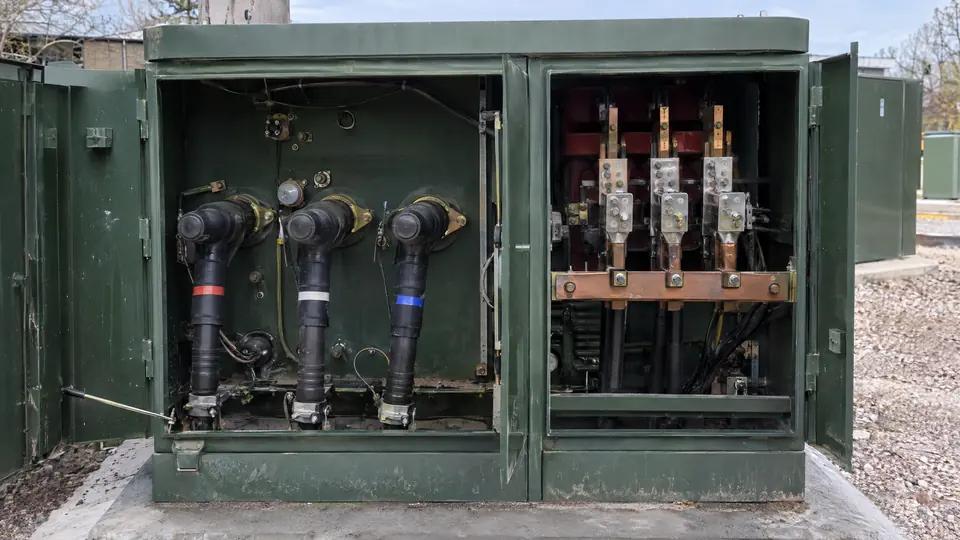
- Three-phase padmount transformers may serve lease facilities, disposal sites and compression loads. Note whether the unit is dead-front, meaning energized connections are enclosed by insulated connectors, and whether it has loop-feed connections for an incoming and outgoing primary circuit.
- Pole-mount transformers may be offered individually or as banks. For a three-unit bank, send all three nameplates rather than assuming their ratings and condition match.
- Substation transformers require photos that show the main tank, cooling equipment and included components. Identify accessories stored separately so the proposed lot is clear.
- Oil-filled transformers use insulating liquid for electrical insulation and cooling. Report visible leaks, missing fittings or damage, and include available fluid records with the equipment details.
Nameplates and records that help establish an offer
When you want to sell surplus transformers from oilfield and midstream operations, start with a readable nameplate photo. Include capacity, primary and secondary voltage, phase and impedance where shown. Primary voltage is the supply-side rating; secondary voltage is the output-side rating. Impedance describes the transformer’s opposition to current and matters when evaluating its electrical characteristics.
Describe whether the transformer is operating, disconnected, stored, retired or failed. For failed units, share the known failure history rather than labeling everything simply as scrap. For used transformers from oilfield and midstream sites, note storage conditions, missing parts and any known repairs.
Available test reports, maintenance records and one-lines help put the equipment in context. A one-line is a simplified electrical diagram showing major equipment and connections. Include PCB labels or fluid test records; PCB refers to polychlorinated biphenyls, substances historically used in some insulating fluids. Photograph cooling ratings such as ONAN/ONAF, which identify natural or fan-assisted cooling arrangements.
Remote-site access, safety and load-out planning
Remote lease locations make directions and loading arrangements important. Provide the site address or coordinates, gate instructions, access contact and any restrictions affecting trucks. Describe unpaved approaches, narrow turns, overhead obstructions, soft ground and the distance between the equipment and a practical loading position.
De-energizing and disconnecting the transformer is handled by the seller or the seller's qualified electrical contractor. We coordinate trucking and load-out with the seller. Identify who will provide suitable loading equipment, where the truck can stage and whether site orientation or an escort is required.
Scheduling should account for ongoing production, contractor availability and the site’s release process. Share available dimensions and weight information, along with photos showing how the unit is mounted. Before anything is loaded, price, payment terms and pickup details are agreed in writing, including which equipment and accessories are included.
Single transformers, stored lots and multi-site fleets
You do not need a fleet to contact us. We buy single units and whole lots, including mixed groups of new, used, retired and failed transformers. For one unit, a nameplate photo, overall photos and a clear condition description provide the starting point for an assessment.
For a larger inventory, use a spreadsheet or list with a separate entry for each transformer. Assign a unit identifier that matches its photos, then record capacity, voltages, condition and location. Mark any units that are still connected or reserved for another project so they are not confused with available inventory.
A multi-site sale needs a location-by-location pickup plan. Tell us which units are grouped in a yard and which remain at leases or facilities. As oilfield transformer buyers, we evaluate the submitted details and respond with an offer; organized records make it easier to define the lot and coordinate its removal.
Texas coverage for lease sites and midstream facilities
Our yard and office are at 6402 McGrew St, Houston, TX 77087, and we buy transformers statewide. For equipment in West Texas and the Permian Basin, include practical truck directions rather than relying on a lease name alone.
We also buy from sellers across San Antonio and South Texas, including New Braunfels, Seguin and Laredo. Eagle Ford sites should identify the equipment location separately from a company mailing address or regional office.
For East and Southeast Texas, including Beaumont, Port Arthur and Texas-side Haynesville operations, the same inventory and access details apply. State whether equipment is at an operating facility, contractor yard or storage location so pickup planning reflects the actual site.
Send your inventory and start the offer process
Call or text (951) 403-5738, email Industrial832@gmail.com, or request an offer for your transformers. Send a nameplate photo, overall photos, quantity, location and condition. Include your contact information and identify the person who can confirm the equipment is available for sale.
Our guide to selling a transformer in Texas provides another starting point for preparing your information. You can submit one unit or an organized lot without waiting for every historical record. Send what is available and clearly identify anything unknown.
Choosing oilfield transformer buyers starts with defining the equipment and the work needed to release it. We evaluate your details and respond with an offer. Once the written terms and pickup arrangements are agreed, we coordinate freight and load-out with your site contact.
Frequently asked questions
Can I sell a transformer that failed in service?
Yes. We buy failed transformers as well as working and new surplus units. Send the nameplate, overall photos and the known failure details, including visible damage or leaks. Identify missing components and include available test or maintenance records.
Do you buy a single pole-mount transformer from a lease?
Yes. We buy single transformers and whole lots. For a single pole-mount unit, provide its nameplate, condition and exact location. If it belongs to a bank, clarify whether the offer request includes one transformer or the complete bank.
Who disconnects the equipment before pickup?
The seller or the seller’s qualified electrical contractor handles de-energizing and disconnection. We plan the trucking and loading with you ahead of pickup. Tell us the equipment’s current status and the expected release date when submitting your details.
Can a fleet include equipment at several Texas sites?
Yes. Provide an inventory grouped by location, with photos matched to each unit. Include an access contact and loading information for every site. That lets us assess the available equipment and plan pickup arrangements around each location.
Do I need test reports before requesting an offer?
Start with nameplate and overall photos, quantity, location and condition. Available test reports, one-lines and PCB records help describe the equipment, but send what you have. Clearly distinguish documented condition from assumptions about whether a stored transformer still works.